

Unless we practice conservation, those who come after us will have to pay the price of misery, degradation, and failure for the progress and prosperity of our day.
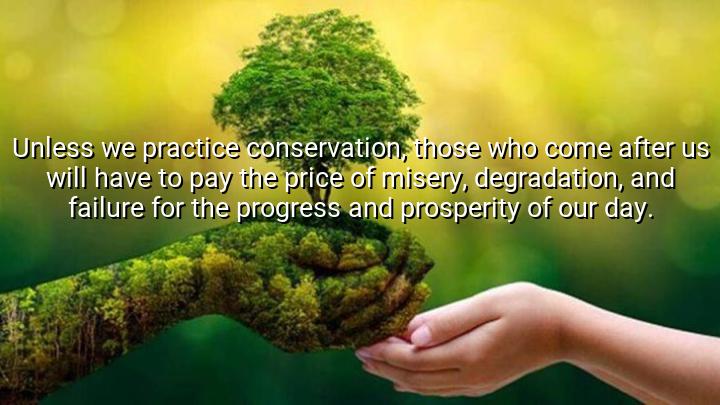




The quote by Gifford Pinchot, "Unless we practice conservation, those who come after us will have to pay the price of misery, degradation, and failure for the progress and prosperity of our day," emphasizes the importance of environmental responsibility for future generations. Pinchot warns that if we do not take steps to preserve our natural resources and protect the environment, the consequences of overexploitation will ultimately affect the well-being of those who follow us. This quote underscores the idea that the gains we make today should not come at the expense of a sustainable future.
The origin of this quote comes from Gifford Pinchot, an influential American forester and conservationist who served as the first Chief of the United States Forest Service. He was a pioneer in advocating for the protection of natural resources through scientific management and sustainable use. Pinchot's work laid the foundation for modern conservation efforts, and his message in this quote reflects his deep concern for the environment and the long-term impact of human actions on the planet.
Pinchot highlights the idea that progress and prosperity should not be defined by short-term gains that lead to environmental degradation. Instead, true success lies in ensuring that resources are managed wisely, so future generations do not face the negative consequences of our overconsumption and wastefulness. The quote calls for a collective effort to implement conservation practices to ensure that our natural heritage remains intact.
In essence, this quote urges us to think beyond our immediate desires and consider the legacy we leave behind. It serves as a reminder that the choices we make today regarding the environment will determine the quality of life for generations to come. If we fail to practice conservation, the price will be paid by future generations in the form of misery and failure. Therefore, it is our duty to prioritize sustainability and take responsibility for the well-being of the planet and those who inherit it.

AAdministratorAdministrator
Welcome, honored guests. Please leave a comment, we will respond soon