

Ultimately, all human activities have as their goal the realization of happiness. Why, then, have we ended up producing the opposite result? Could the underlying cause be our failure to correctly understand the true nature of happiness?
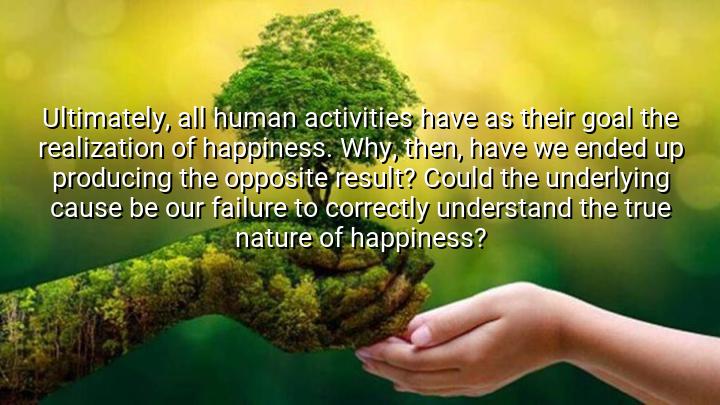




In this quote, Daisaku Ikeda explores the idea that happiness is the ultimate goal of all human activities, yet many people end up feeling dissatisfied or unfulfilled. He questions why, despite the universal pursuit of happiness, society often produces the opposite result—stress, unhappiness, and discontent. Ikeda suggests that the root cause of this paradox may lie in a misunderstanding of the true nature of happiness.
Ikeda points out that society often defines happiness in material or external terms, such as wealth, success, or status, leading people to focus on these fleeting achievements rather than on deeper, more lasting forms of happiness. He suggests that if we fail to understand what happiness truly is—beyond external circumstances—we may end up chasing goals that don't lead to real fulfillment. This misunderstanding of happiness can cause people to feel trapped in a cycle of constant striving without ever achieving true contentment.
The core of the quote reflects Ikeda's philosophy that happiness is not simply about external success, but about inner peace, self-understanding, and connection with others. True happiness, according to Ikeda, comes from a deeper understanding of our values, purpose, and the meaning behind our actions. It's about aligning our desires with our true needs, rather than chasing superficial achievements.
Ultimately, Daisaku Ikeda's quote calls for a shift in how we define and pursue happiness. Instead of seeking it in external accomplishments or possessions, he encourages us to look inward and understand the true nature of happiness, which involves living in a way that brings meaning, peace, and harmony into our lives and the lives of others.

AAdministratorAdministrator
Welcome, honored guests. Please leave a comment, we will respond soon