

Toxins love to get you while you're young. Lead, mercury, secondhand smoke and sundry other environmental nasties do a lot more damage when tissue is immature, vulnerable and growing than when it's mature and comparatively fixed.
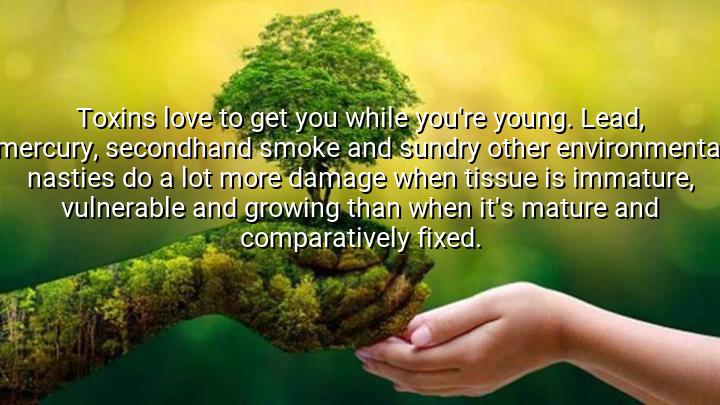




In this quote, Jeffrey Kluger explains how certain toxins, like lead, mercury, and secondhand smoke, pose a much greater risk to individuals during the early stages of development. He points out that young tissue, which is still immature, vulnerable, and in the process of growing, is more susceptible to the harmful effects of environmental nasties than mature tissue, which has become more stable and fixed over time. This highlights the heightened vulnerability of children and adolescents to toxins compared to adults, whose bodies are more resilient to these types of damage.
Kluger’s statement underscores the critical importance of protecting children from exposure to harmful environmental factors. The idea that younger individuals are at a greater risk of damage from toxic substances reflects the broader public health concern about how environmental pollution and hazards can impact developmental health. He emphasizes that exposure to toxins during critical periods of growth can lead to more severe, lasting health issues, such as developmental delays, cognitive impairments, or even long-term diseases that manifest later in life.
The origin of this quote lies in Kluger’s work as a science and environmental journalist, where he often addresses the intersection of human health and environmental factors. As a writer for Time magazine, Kluger has written extensively on topics related to public health, environmental science, and the impact of pollutants on human well-being. His work frequently emphasizes the need for prevention and awareness to protect vulnerable populations, particularly children, from the risks posed by environmental toxins.
Ultimately, Kluger’s words are a call to action and a reminder of the importance of safeguarding the young from harmful environmental influences. They stress that protecting children from exposure to toxins is not just about preventing immediate harm, but also about ensuring their long-term health and well-being. By recognizing the heightened vulnerability of growing bodies, society can make more informed choices about policies and practices aimed at reducing toxic exposures.

AAdministratorAdministrator
Welcome, honored guests. Please leave a comment, we will respond soon