

To understand is to forgive, even oneself.
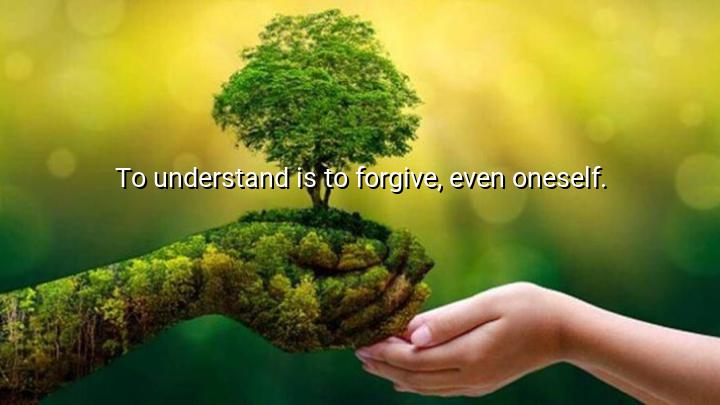




In this quote, Alexander Chase suggests that understanding is the key to forgiveness, not only towards others but also towards oneself. He implies that when we gain a deeper understanding of someone's actions or the reasons behind their behavior, we are more likely to let go of anger or resentment and offer forgiveness. This understanding allows us to see the situation from a broader perspective, reducing the emotional weight of the offense and facilitating the process of healing.
Chase’s statement also extends to self-forgiveness, emphasizing that understanding our own actions, flaws, and mistakes is necessary for self-compassion. Often, we are our harshest critics, and without understanding the context or reasons behind our own actions, we struggle to forgive ourselves. By understanding our own imperfections, we create space for growth and healing, making it easier to let go of guilt and regret.
The origin of this quote likely stems from Chase’s philosophical understanding of human emotion and psychology. As a writer and thinker, he was interested in exploring the complexities of relationships and personal growth. This quote reflects a common theme in many philosophical and psychological teachings that forgiveness, both of others and oneself, is essential for emotional well-being and personal peace.
Ultimately, Chase’s quote encourages us to approach forgiveness with empathy and understanding, recognizing that it is not simply a moral or ethical action, but a necessary step towards emotional freedom. By understanding the factors that influence behavior—both our own and others'—we can offer forgiveness and cultivate compassion, leading to healthier relationships and greater self-acceptance.

AAdministratorAdministrator
Welcome, honored guests. Please leave a comment, we will respond soon