

To read without reflecting is like eating without digesting.
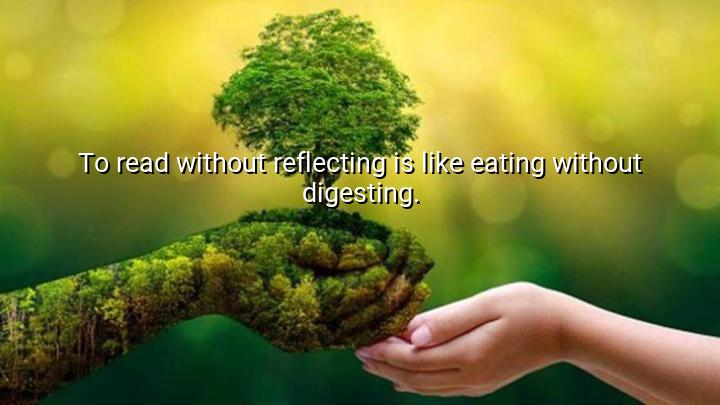




In the quote "To read without reflecting is like eating without digesting," Edmund Burke draws a powerful comparison between the act of reading and the process of eating. He suggests that simply reading without taking the time to reflect on the material is a waste, much like eating without properly digesting food. Just as digestion is necessary to derive nourishment from food, reflection is essential to extract meaningful insights from what we read. Burke emphasizes that knowledge must be absorbed and understood in order to be truly valuable.
Burke's comparison also speaks to the difference between passive and active engagement with information. Reading without reflection is a superficial act that does not lead to deeper understanding or growth. Reflection, on the other hand, allows us to process and integrate new ideas, connect them to our existing knowledge, and ultimately apply them to our lives. This active process of thinking critically about what we encounter enables us to learn and grow.
The quote underscores the importance of not merely accumulating facts, but of engaging with them thoughtfully. Reflection transforms information into wisdom. Without this step, knowledge remains disconnected and lacks practical application. In essence, Burke is advocating for a more mindful and purposeful approach to reading, one that encourages deep thinking and personal engagement with the material.
Ultimately, Burke’s quote serves as a reminder that intellectual nourishment comes not just from the acquisition of knowledge, but from the integration and reflection upon that knowledge. It encourages us to engage with what we read in a way that allows it to enrich our thinking and shape our understanding of the world.

AAdministratorAdministrator
Welcome, honored guests. Please leave a comment, we will respond soon