

To change what you get, you must change who you are.
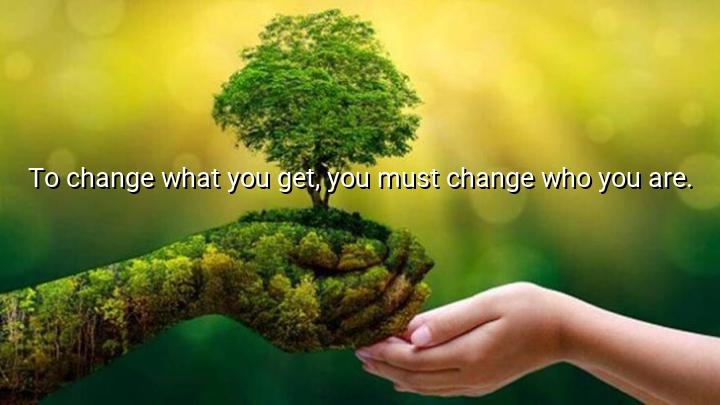




The quote "To change what you get, you must change who you are" by Vernon Howard encapsulates a profound principle of personal transformation. At its core, the statement suggests that our external outcomes—our successes, relationships, happiness, and achievements—are not random but rather reflections of our internal state. To obtain different results in life, one must first address the underlying beliefs, attitudes, and behaviors that shape those results.
Vernon Howard, a spiritual teacher and author known for his teachings on self-awareness and inner growth, emphasized that lasting change begins from within. He taught that most people attempt to improve their lives by changing external circumstances—jobs, partners, routines—without recognizing that the true lever of transformation lies in evolving their identity, or consciousness. This quote reflects Howard’s larger philosophy: that authentic change requires confronting and dissolving the ego-driven self.
In practical terms, the quote is a call to examine our self-concept and emotional patterns. If someone consistently experiences frustration, failure, or disconnection, the solution is not merely better strategies or new opportunities, but a shift in how they perceive themselves and others. Only by becoming more aware, compassionate, resilient, or disciplined—i.e., changing who we are—can we generate new experiences and outcomes.
Ultimately, the quote urges personal responsibility and empowerment. It tells us that we are not victims of fate, but creators of our own reality. When we elevate our inner life, the external rewards naturally follow. As Howard might suggest, by becoming more authentic, awake, and whole, we align with the life we truly desire.

AAdministratorAdministrator
Welcome, honored guests. Please leave a comment, we will respond soon