

To be hopeful means to be uncertain about the future, to be tender toward possibilities, to be dedicated to change all the way down to the bottom of your heart.
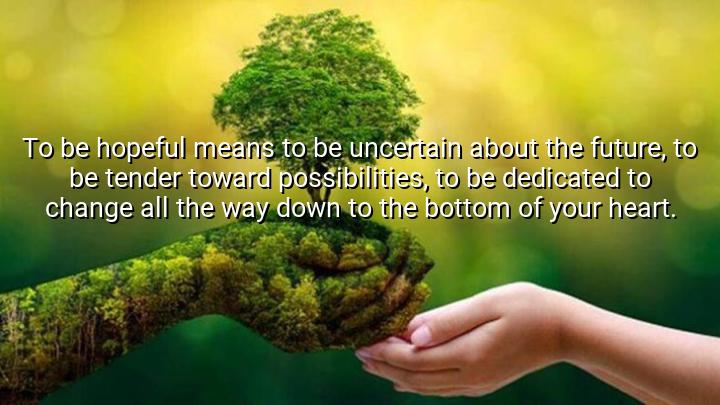




The quote by Rebecca Solnit, "To be hopeful means to be uncertain about the future, to be tender toward possibilities, to be dedicated to change all the way down to the bottom of your heart," presents hope not as blind optimism, but as an active and emotional commitment to the unknown. Solnit redefines hope as an embrace of uncertainty, where instead of fearing what’s ahead, we remain open to what could be—recognizing that the future is still unwritten and full of potential.
The phrase "tender toward possibilities" reveals Solnit’s belief in approaching the future with care, curiosity, and imagination. Rather than demanding certainty or control, she encourages a softer, more humble stance—one that welcomes change and believes in the chance for better outcomes. This gentleness is not weakness, but rather a deeply felt form of courage, rooted in empathy and the belief in human potential.
Solnit, an acclaimed writer, historian, and activist, often explores themes of social justice, climate, and human resilience. Her work is known for challenging cynicism and inspiring action by reframing how we think about agency and collective power. This quote comes from her broader view that hope is not passive; it’s a practice that calls for emotional investment, vigilance, and a willingness to keep pushing for change, even when the outcome is unclear.
Ultimately, Solnit’s quote reminds us that true hope is both emotional and transformative. It involves accepting the messiness of uncertainty, nurturing possibilities, and committing ourselves wholeheartedly to the work of building a better future. It’s a quiet, steadfast form of resistance—and one that fuels meaningful progress.

AAdministratorAdministrator
Welcome, honored guests. Please leave a comment, we will respond soon