

There is no religion in which everyday life is not considered a prison; there is no philosophy or ideology that does not think that we live in alienation.
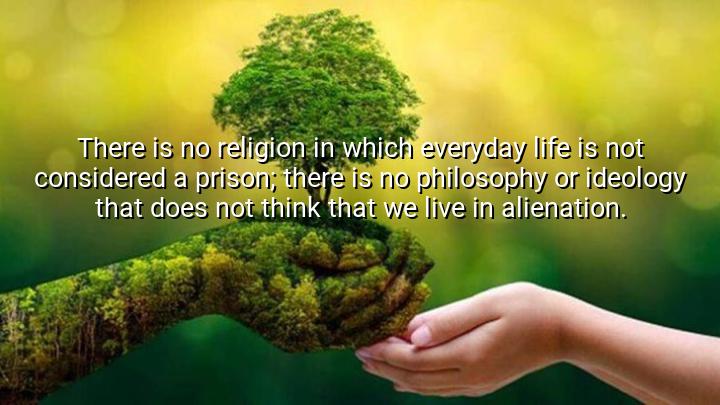




The quote by Eugene Ionesco, “There is no religion in which everyday life is not considered a prison; there is no philosophy or ideology that does not think that we live in alienation,” reflects on the existential condition of human life. Ionesco suggests that across religions, philosophies, and ideologies, there is a recurring perception that ordinary life is restrictive or constraining, and that humans often feel estranged from their true selves or the world around them. The quote emphasizes the universal sense of alienation and discontent that permeates human experience.
Eugene Ionesco, a 20th-century Romanian-French playwright and key figure in the Theatre of the Absurd, was known for exploring the absurdity, isolation, and meaninglessness of modern life. His works often highlight the contradictions of existence and the inability of traditional systems—be they religious, philosophical, or political—to fully address the human experience. This quote reflects his critical perspective on how humans are perpetually caught between societal expectations and inner longing for authenticity.
The origin of the quote comes from Ionesco’s reflections on the human condition in essays and interviews, where he frequently examined the alienating effects of modern civilization. By stating that every system perceives life as a prison or speaks of alienation, he underscores a shared human recognition of limitations and existential struggle. The quote suggests that regardless of the framework people follow, life’s constraints and the search for meaning remain central concerns.
In essence, Ionesco’s words remind us of the universal challenge of reconciling individual freedom with societal structures. The quote encourages reflection on the ways humans strive for purpose, connection, and authenticity despite the sense of constraint and alienation that accompanies life. It calls attention to the existential tension between the limitations imposed by the world and the human desire for freedom and self-realization.

AAdministratorAdministrator
Welcome, honored guests. Please leave a comment, we will respond soon