

There is a real danger that computers will develop intelligence and take over. We urgently need to develop direct connections to the brain so that computers can add to human intelligence rather than be in opposition.
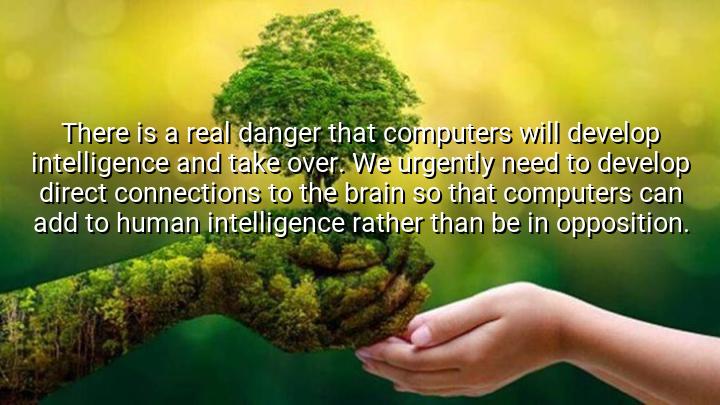




The quote by Stephen Hawking, "There is a real danger that computers will develop intelligence and take over. We urgently need to develop direct connections to the brain so that computers can add to human intelligence rather than be in opposition," reflects Hawking's concerns about the future of artificial intelligence (AI) and its potential impact on humanity. He warns that as computers become increasingly intelligent, they could pose a threat to human dominance if their development is not carefully managed. Rather than allowing AI to evolve in a way that could become adversarial, Hawking advocates for creating direct connections to the brain, which would allow computers to complement and enhance human intelligence, rather than competing with it.
The origin of this quote is rooted in Hawking's broader discussions on technology, AI, and the future of humanity. As a theoretical physicist and one of the most prominent voices in science, Hawking frequently spoke about the risks and rewards of technological advancements. This particular quote highlights his belief that AI could become a significant force in the future, but unless we find a way to ensure its integration with human cognitive abilities, it could lead to unintended and potentially dangerous consequences.
Hawking’s statement underscores the importance of symbiosis between humans and technology. He is advocating for a future where humans do not lose control of technology, but instead work with it to augment their capabilities. By suggesting the development of brain-computer interfaces, he envisions a world where humans can enhance their own intelligence and skills through technology, creating a partnership rather than a rivalry.
In essence, Hawking's quote is a cautionary message about the potential dangers of artificial intelligence and the need for ethical and careful development of new technologies. His call for brain-computer interfaces highlights his hope for a future where technology can work to enhance humanity rather than threaten its existence. It’s a reflection on the balance between embracing technological innovation and ensuring that it serves to improve, rather than undermine, human life.

AAdministratorAdministrator
Welcome, honored guests. Please leave a comment, we will respond soon