

The way you 'take history' is also a way of 'making history.'
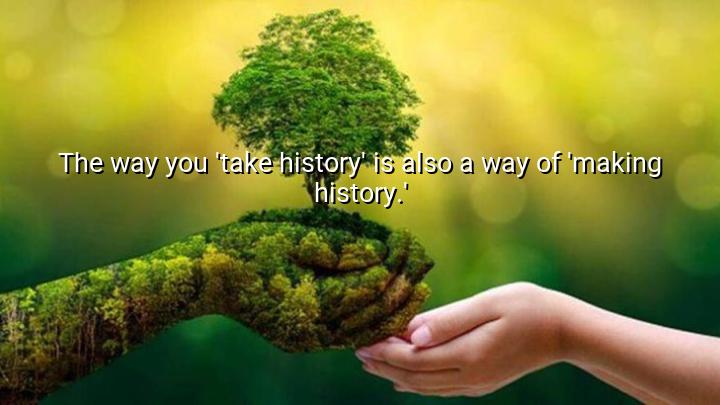




In this quote, Erik Erikson suggests that how we interpret and engage with history directly influences how we shape and create it. The idea is that our perception of the past is not passive; it actively informs the way we act in the present and the decisions we make for the future. By "taking history," Erikson refers to the lens through which we view the past—our understanding of past events, values, and lessons. This perspective is crucial because it doesn't just reflect what has already occurred; it shapes how we move forward, thus "making history" in the process.
Erikson, a renowned psychologist, is known for his work on identity and social development, particularly in terms of how individuals and cultures evolve over time. His statement highlights the dynamic relationship between personal identity and historical context. The way a society or an individual interprets its history can either reinforce the status quo or inspire change. If people view history as a series of failures, they might be motivated to make different choices. If they see it as a series of successes, they may try to replicate past achievements.
The origin of this quote stems from Erikson’s broader ideas about human development and cultural identity. As someone who studied the psychosocial development of individuals, Erikson believed that history was deeply intertwined with how people understood themselves and their roles in the world. His focus was on how historical events and societal narratives influence individual identity formation and the collective sense of meaning within a culture.
Ultimately, Erikson’s quote emphasizes that history is not just a static record of the past, but something we actively construct through our interpretations and actions. By understanding and engaging with history, we participate in its ongoing creation, continually shaping the world around us and influencing future generations.

AAdministratorAdministrator
Welcome, honored guests. Please leave a comment, we will respond soon