

The only thing that can save us as a species is seeing how we're not thinking about future generations in the way we live.
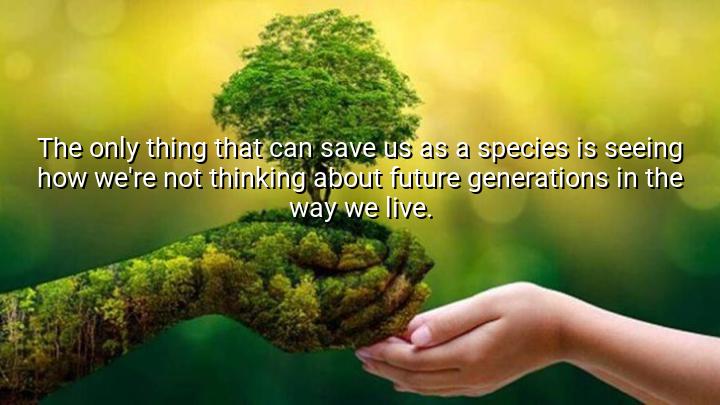




The quote by Erik Erikson, a renowned psychologist, underscores the idea that the survival of humanity depends on our ability to consider the future and the well-being of future generations. Erikson suggests that the choices we make today—whether in terms of environmental, social, or political decisions—can either ensure or hinder the progress of coming generations. By failing to think about the long-term impact of our actions, we risk jeopardizing the planet and society for those who follow us.
Erikson’s statement speaks to the lack of intergenerational responsibility that often prevails in modern society. He challenges us to reflect on how our current way of living—driven by immediate desires and short-term goals—can be detrimental to the sustainability of the world for future generations. This is a call to move beyond self-interest and act with a sense of duty toward the world we will leave behind.
The origin of this quote is rooted in Erikson’s work on psychosocial development and his deep concern for the larger societal dynamics. As a thinker who explored identity, community, and the human condition, Erikson often emphasized the importance of considering the collective as well as the individual. In this quote, he extends his focus to the broader, long-term impacts of human behavior on the world and future generations.
Ultimately, Erikson’s quote calls for a shift in perspective—from immediate gratification to long-term sustainability. It challenges individuals and societies to adopt a mindset that values the legacy we leave for those who will inherit the planet, urging us to live in a way that is mindful of the future and its inhabitants.

AAdministratorAdministrator
Welcome, honored guests. Please leave a comment, we will respond soon