

The truth is that we can learn to condition our minds, bodies, and emotions to link pain or pleasure to whatever we choose. By changing what we link pain and pleasure to, we will instantly change our behaviors.
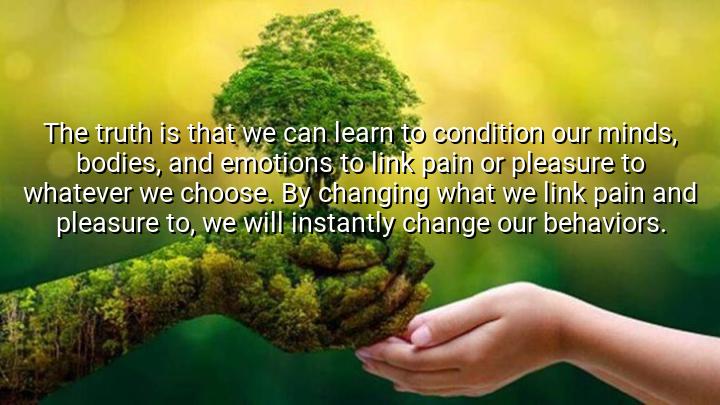




The quote "The truth is that we can learn to condition our minds, bodies, and emotions to link pain or pleasure to whatever we choose. By changing what we link pain and pleasure to, we will instantly change our behaviors." by Tony Robbins emphasizes the profound power of mental conditioning in shaping our habits and decisions. Robbins asserts that human behavior is largely driven by the associations we create—what we perceive as bringing pleasure or pain. If we consciously retrain these associations, we can change not only how we feel but how we act.
Tony Robbins, a world-renowned motivational speaker, author, and life coach, developed this concept as part of his broader teachings on neuro-associative conditioning, which he introduced in books like Awaken the Giant Within. He believes that the key to personal transformation lies in understanding the emotional forces behind our decisions. By learning to associate pleasure with productive behaviors and pain with harmful ones, we can rewire our mindset and shift our behavior patterns almost immediately.
The idea of linking pain and pleasure is rooted in psychological principles, particularly those related to classical conditioning and behavioral psychology. Robbins adapts these ideas for practical, everyday use—encouraging people to become more aware of the emotional triggers that guide their choices. For example, someone might stop procrastinating if they begin to associate pain with the stress of last-minute work and pleasure with the peace of finishing tasks early.
Ultimately, Robbins’ quote is a call to take control of our internal world. It suggests that change doesn’t always require slow, incremental steps—sometimes, by shifting our emotional associations, we can change instantly. It’s a powerful reminder that our thoughts and feelings are not fixed, and with conscious effort, we can direct them toward more empowering outcomes.

AAdministratorAdministrator
Welcome, honored guests. Please leave a comment, we will respond soon