

The tragedy of life is in what dies inside a man while he lives - the death of genuine feeling, the death of inspired response, the awareness that makes it possible to feel the pain or the glory of other men in yourself.
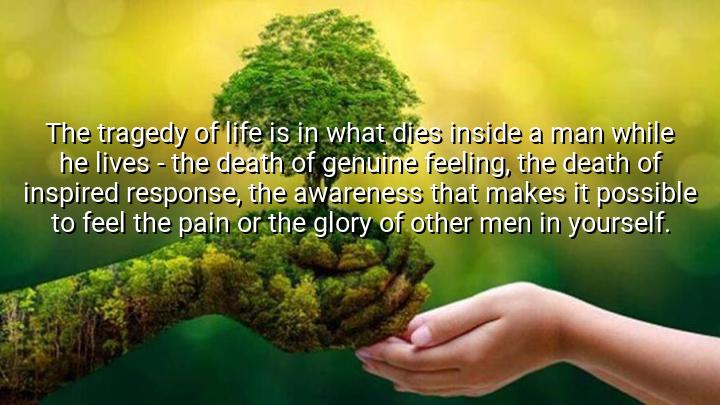




In this quote, Norman Cousins, an American author, journalist, and peace advocate, explores the tragedy of losing essential parts of humanity while still being alive. He suggests that the true tragedy of life is not physical death, but the internal death of things that make us human, such as genuine feeling, the ability to respond with inspiration, and the awareness that connects us to others' experiences—both their pain and their glory. Cousins is reflecting on the emotional and spiritual decay that can occur when we become disconnected from these vital aspects of life.
The loss of genuine feeling and inspired response represents a sense of numbness or emotional detachment. When these elements die inside a person, it can lead to a life where one is no longer able to truly connect with their own emotions or the experiences of others. This form of spiritual death may not be visible on the outside, but it has profound effects on a person's empathy, relationships, and overall quality of life. The quote implies that such a loss is as tragic, if not more so, than physical death.
Cousins also emphasizes the importance of awareness, which allows us to feel the pain and joy of others. The ability to empathize is what connects people to one another, fostering a deeper sense of community and shared human experience. When this awareness fades, individuals may become isolated from the world around them, unable to understand or appreciate the human condition in its full spectrum.
Ultimately, Norman Cousins's quote underscores the importance of staying emotionally and spiritually engaged with life. It warns against the dangers of becoming numb or disconnected, encouraging us to maintain our vulnerability, compassion, and awareness in order to fully experience the depth of life and our connections with others. The true tragedy, according to Cousins, is not just physical death but the internal death of feeling and awareness that makes life rich and meaningful.

AAdministratorAdministrator
Welcome, honored guests. Please leave a comment, we will respond soon