

The struggle between Israelis and Palestinians is a perfect reflection of the struggle between fear and forgiveness that rages within us all.
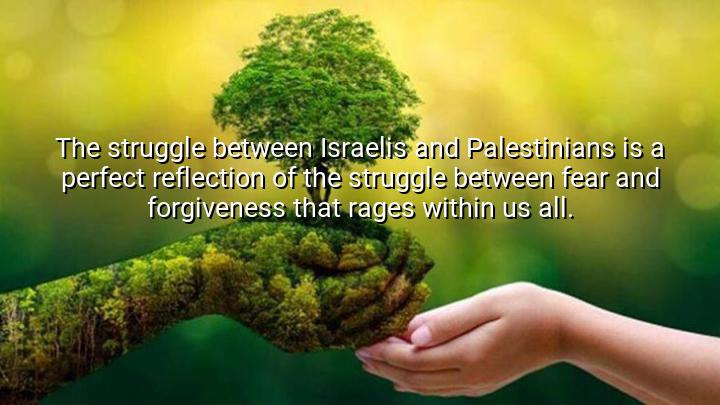




Marianne Williamson’s quote draws a parallel between the Israeli-Palestinian conflict and the internal struggle each person faces between fear and forgiveness. She suggests that the intense external conflict reflects the internal battles within individuals, where fear often holds people back from embracing forgiveness. On a personal level, this internal conflict can manifest as resistance to letting go of anger, bitterness, or past hurts, much like the ongoing tension in political and social conflicts.
The mention of fear in the quote points to the way fear—whether of the unknown, of others, or of past experiences—can drive people to act defensively, leading to more division and violence. Fear prevents individuals and nations from finding common ground or healing from past wounds. On the other hand, forgiveness is the key to overcoming fear, allowing for reconciliation, understanding, and the possibility of peace.
Williamson’s perspective also suggests that the Israeli-Palestinian conflict serves as a mirror for all of humanity’s struggles with fear and forgiveness. The longer that individuals or groups cling to their fears, the more entrenched their divisions become. But when people choose forgiveness over fear, they can break free from the cycle of hatred and violence that perpetuates conflict.
The origin of the quote reflects Williamson’s broader philosophy of love, healing, and personal transformation. As a spiritual teacher and author, she often emphasizes how inner peace and the willingness to forgive are essential for resolving not just personal struggles, but global ones as well. This quote serves as a reminder that the path to peace—whether in our hearts or in the world—is found in choosing forgiveness over fear.

AAdministratorAdministrator
Welcome, honored guests. Please leave a comment, we will respond soon