

Human civilization as we know it is like the Titanic headed for the iceberg, whether the iceberg be nuclear, environmental or terrorism-related.
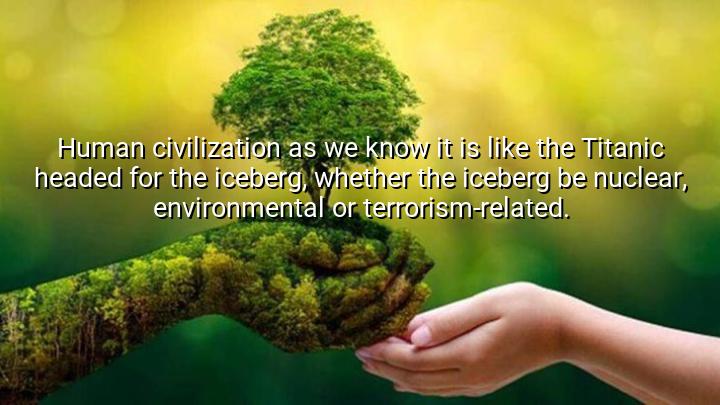




In this quote, Marianne Williamson, an author and spiritual teacher, compares human civilization to the Titanic, suggesting that it is heading toward a disaster, much like the infamous iceberg collision that sank the ship. She argues that whether the iceberg is nuclear, environmental, or related to terrorism, humanity is on a path toward significant destruction if we do not change course. Williamson’s metaphor conveys a sense of urgency and forewarning about the global threats that could lead to a crisis for civilization.
Williamson’s statement highlights the idea that humanity is ignoring serious threats—nuclear war, environmental collapse, and terrorism—that are becoming more imminent. She suggests that these risks are growing and could eventually lead to catastrophic consequences if not addressed. The Titanic metaphor is powerful because it implies that despite the visible dangers, society is continuing forward without taking the necessary precautions or making the changes required to avoid disaster.
The origin of the quote likely stems from Williamson's spiritual and political views, where she often emphasizes the need for social change, personal responsibility, and spiritual growth in addressing global issues. Her work often focuses on the importance of awareness and collective action to prevent large-scale crises, whether in the realm of politics, the environment, or human relationships. This quote reflects her belief in the interconnectedness of global challenges and the need for urgent action to avoid catastrophe.
Ultimately, Williamson’s quote serves as a wake-up call, urging people to recognize the serious threats facing civilization and to take action before it is too late. It challenges individuals and societies to address these looming dangers—whether through policy, environmental sustainability, or peaceful conflict resolution—before they lead to irreversible damage.

AAdministratorAdministrator
Welcome, honored guests. Please leave a comment, we will respond soon