

The squandering of oil and gas is associated with one of the greatest tragedies, not in the least resolved, which is suffered by humankind: climate change.
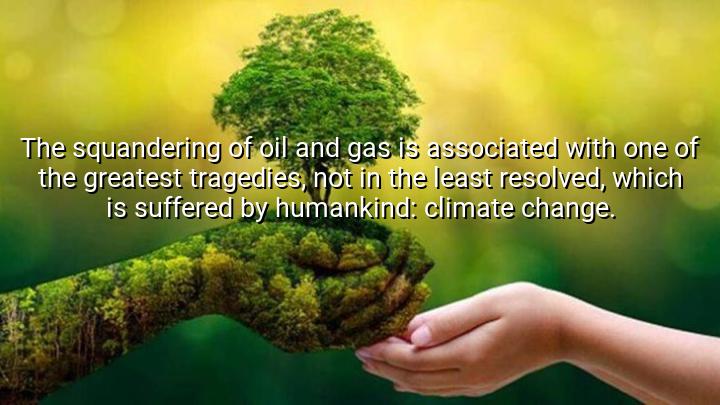




This quote by Fidel Castro, the former Cuban revolutionary leader and president, draws a direct connection between the excessive consumption of fossil fuels and the global crisis of climate change. When he refers to the “squandering of oil and gas,” Castro is criticizing the wasteful and unsustainable use of non-renewable energy resources, particularly by industrialized nations. He frames this behavior as not just inefficient or shortsighted, but as a major contributor to one of the greatest tragedies facing humanity.
By calling climate change a tragedy “not in the least resolved,” Castro underscores the urgency and neglect surrounding the issue. He implies that despite widespread awareness of its consequences—rising sea levels, extreme weather, food insecurity, and displacement—the world has yet to take adequate collective action. His words serve as both a warning and a condemnation, pointing to how economic interests and political inaction have allowed the crisis to deepen.
The origin of this quote is rooted in Castro’s later speeches and writings, particularly in the 21st century when he became increasingly vocal about environmental degradation, resource inequality, and the responsibility of developed nations in causing ecological harm. As a leader of a developing country, Castro often criticized capitalist systems for prioritizing profit over sustainability, and for imposing the consequences of climate change on the global South—nations that are often the least responsible for emissions but suffer the most from their effects.
Ultimately, Castro’s quote calls for a rethinking of global energy practices and a shift toward more responsible stewardship of the planet. It reflects his broader ideological stance that environmental justice is inseparable from social and economic justice, and that addressing climate change requires confronting the systems that enable excess and inequality. His message remains relevant today as the world continues to grapple with how to transition away from fossil fuels and prevent further environmental catastrophe.

AAdministratorAdministrator
Welcome, honored guests. Please leave a comment, we will respond soon