

The quicker we humans learn that saving open space and wildlife is critical to our welfare and quality of life, maybe we'll start thinking of doing something about it.
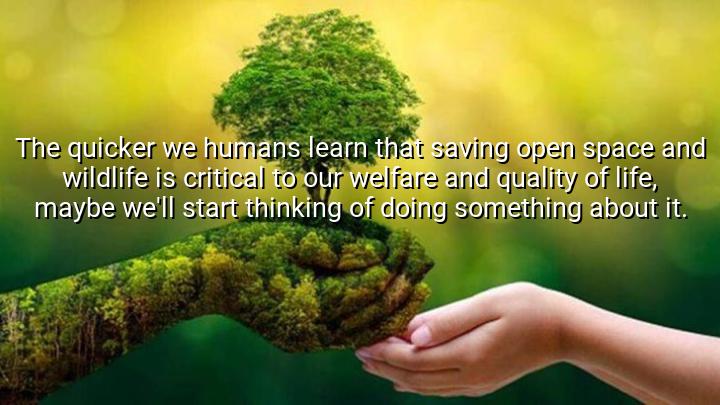




The quote by Jim Fowler, "The quicker we humans learn that saving open space and wildlife is critical to our welfare and quality of life, maybe we'll start thinking of doing something about it," emphasizes the vital connection between nature and human well-being. Fowler, a renowned zoologist and conservationist, stresses that preserving natural habitats and biodiversity is not just an environmental concern but a fundamental component of sustaining a healthy and balanced society.
By highlighting open space and wildlife, Fowler points to the direct benefits that ecosystems provide, such as clean air and water, recreational opportunities, and ecological stability. He implies that human welfare is intertwined with the health of the natural world, and neglecting conservation efforts can negatively impact both the environment and our quality of life. The quote calls for greater awareness and proactive action to safeguard these critical resources.
The origin of this quote comes from Fowler’s decades of work as a wildlife expert and television host, where he educated the public about animals, habitats, and environmental issues. Known for his efforts to engage people with nature through media and conservation programs, Fowler consistently highlighted the importance of learning from and protecting the natural world. His perspective reflects a lifelong commitment to fostering environmental stewardship.
Ultimately, Fowler’s quote is both a warning and a call to action. It encourages society to recognize the essential role of open space and wildlife in our lives and to take meaningful steps toward their preservation. By internalizing this connection and acting responsibly, humans can ensure a healthier, more sustainable, and enriched quality of life for current and future generations.

AAdministratorAdministrator
Welcome, honored guests. Please leave a comment, we will respond soon