

I don't think we're going to save anything if we go around talking about saving plants and animals only; we've got to translate that into what's in it for us.
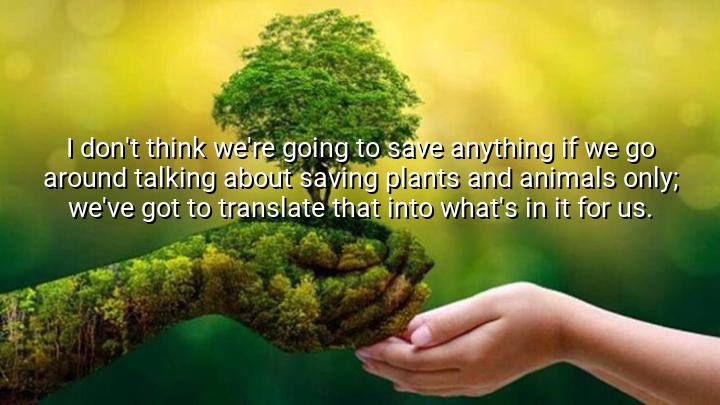




The quote by Jim Fowler, "I don't think we're going to save anything if we go around talking about saving plants and animals only; we've got to translate that into what's in it for us," emphasizes the importance of connecting conservation efforts to human interests and well-being. Fowler, a renowned zoologist and wildlife educator, argues that while protecting biodiversity is critical, people are more likely to take action when they understand the direct benefits that a healthy environment provides to their own lives.
By highlighting the need to translate conservation into personal relevance, Fowler points to a practical strategy for motivating broader public engagement. Rather than appealing solely to ethics or abstract environmental ideals, showing how plants and animals contribute to clean air, water, and food systems, or support ecosystem services, makes conservation more tangible and compelling.
The origin of this quote comes from Fowler’s decades of experience educating the public about wildlife and environmental issues. As a television personality and naturalist, he often emphasized the importance of framing conservation in ways that resonate with everyday human concerns. His approach reflects a belief that sustainable environmental action requires both knowledge and personal motivation.
Ultimately, Fowler’s quote serves as both a guiding principle and a practical insight. It encourages people to understand that saving plants and animals is not just about altruism—it directly impacts human well-being, quality of life, and survival. By connecting environmental action to tangible benefits for people, Fowler advocates for a more effective and sustainable approach to conservation.

AAdministratorAdministrator
Welcome, honored guests. Please leave a comment, we will respond soon