

The purpose of Compulsory Education is to deprive the common people of their commonsense.
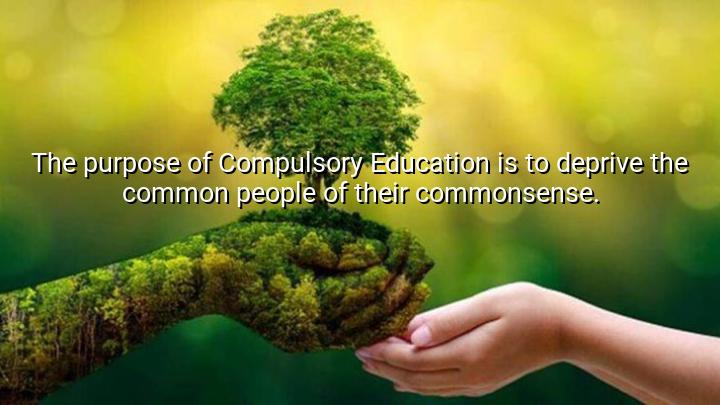




The quote “The purpose of Compulsory Education is to deprive the common people of their commonsense.” by Gilbert K. Chesterton is a satirical critique of formal education systems. Chesterton suggests that instead of nurturing natural commonsense, compulsory schooling often imposes rigid rules, artificial knowledge, and standardized thinking. His words reflect skepticism about whether education, as structured by governments and institutions, truly serves the individual or merely trains people to conform.
By emphasizing the loss of commonsense, Chesterton points to the irony that ordinary people often possess practical wisdom through lived experience, yet formal education can strip this away by prioritizing abstract theories or bureaucratic learning. For him, true understanding should empower people to think independently, but compulsory schooling risks creating individuals who know facts but lack practical judgment.
The origin of this thought lies in Chesterton’s broader role as a writer, essayist, and social critic in the late 19th and early 20th centuries. Known for his sharp wit and paradoxical style, he frequently challenged modern trends, including industrialization, bureaucracy, and state control. His critique of compulsory education fits into his wider concern that modern society often undermines individuality and the natural wisdom of ordinary people.
In essence, Chesterton’s quote is less a literal condemnation of education and more a humorous but pointed reminder of its potential pitfalls. It warns that when education becomes overly rigid and mechanical, it risks eroding commonsense, the very quality that helps people navigate everyday life with clarity and practicality. His words invite us to reconsider whether education is truly serving human needs or stifling them.

AAdministratorAdministrator
Welcome, honored guests. Please leave a comment, we will respond soon