

The most tragic paradox of our time is to be found in the failure of nation-states to recognize the imperatives of internationalism.
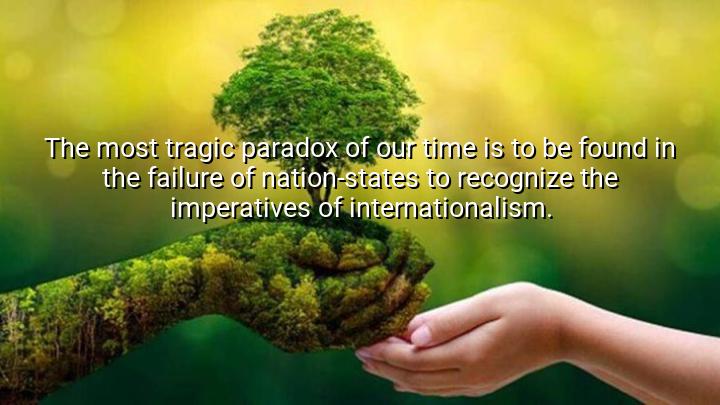




The quote by Earl Warren, "The most tragic paradox of our time is to be found in the failure of nation-states to recognize the imperatives of internationalism," addresses the tension between national sovereignty and the need for global cooperation. Warren is highlighting the paradox that while nations face interconnected global challenges—such as war, economic instability, and environmental issues—many continue to prioritize their own interests over the broader needs of the international community. This failure to embrace internationalism or global collaboration is seen as a significant drawback in addressing the complex issues of the modern world.
The origin of this quote comes from Warren's tenure as Chief Justice of the United States Supreme Court, a position that placed him at the forefront of many national and international issues. As a prominent legal figure, Warren witnessed the increasing challenges that required cooperative, international efforts, such as the Cold War tensions and the push for human rights protections. He was deeply concerned about how nation-states often acted in their own self-interest rather than working together to solve problems that spanned borders.
Warren’s statement speaks to the importance of internationalism, or the idea that nations must recognize their interconnectedness and work together for the common good. The failure to acknowledge these global needs, according to Warren, not only impedes progress but creates a paradox where countries are more likely to fail in the face of challenges because they refuse to engage in cooperative solutions. This reluctance to adopt an internationalist perspective, in Warren’s view, is one of the greatest tragedies of his time.
In essence, this quote calls for a shift in how nation-states approach global issues, urging a move from isolationism toward internationalism. Warren’s words suggest that only through cooperation and mutual understanding can nations effectively address the pressing challenges of the modern world. The failure to embrace this vision of global unity, he argues, undermines the potential for collective action and progress.

AAdministratorAdministrator
Welcome, honored guests. Please leave a comment, we will respond soon