

The more things change, the more they are the same.
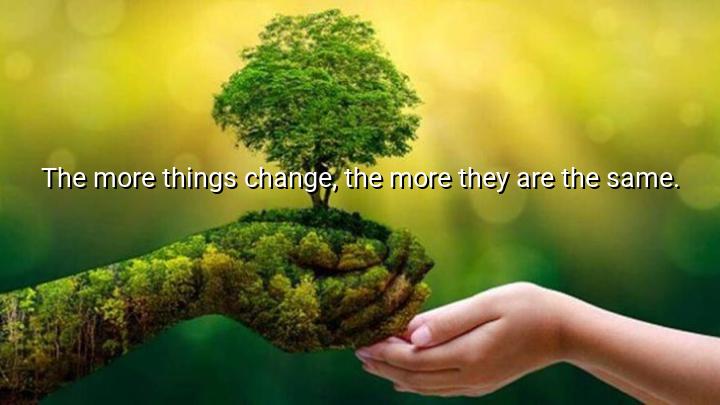




The quote “The more things change, the more they are the same” is attributed to Alphonse Karr, a 19th-century French critic, journalist, and novelist. Originally written in French as “Plus ça change, plus c’est la même chose,” this aphorism first appeared in one of his satirical journals in the mid-1800s. Karr was known for his sharp wit and social commentary, and this quote reflects his skepticism about the true impact of social and political change.
At its core, the quote suggests a paradox: while change may appear to happen on the surface, the underlying patterns, attitudes, or structures often remain the same. Whether in politics, culture, or human nature, Karr implies that transformation can be superficial, giving the illusion of progress while fundamentals stay untouched. This reflects a kind of cynicism, or perhaps a realistic appraisal of how slowly deep change occurs.
This sentiment resonates across time, often invoked in discussions about revolution, reform, or technological advancements. Even as societies adopt new systems or trends, they often fall into the same old habits, suggesting that human behavior resists true transformation. Karr’s quote captures this cycle and has become a proverbial expression of the tension between appearance and reality in historical and personal change.
Ultimately, the quote challenges us to look beyond surface-level shifts and question whether genuine progress is taking place. It serves as a reminder that while external conditions may evolve, the deeper forces—such as power, greed, or fear—often persist. Karr’s words continue to echo in modern times, inviting critical reflection on the nature of change and continuity in the world around us.

AAdministratorAdministrator
Welcome, honored guests. Please leave a comment, we will respond soon