

The healthy man does not torture others - generally it is the tortured who turn into torturers.
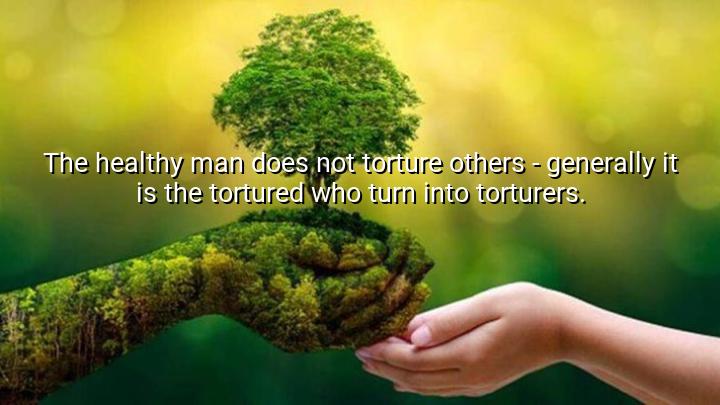




The quote, "The healthy man does not torture others - generally it is the tortured who turn into torturers," by Carl Jung, explores the psychological and emotional impacts of suffering and trauma. Jung suggests that a person who is mentally and emotionally healthy does not harm or torture others. Instead, it is often those who have been subjected to pain and abuse who, as a result of their own unresolved trauma, end up inflicting harm on others. The quote highlights the cycle of hurt and how unresolved emotional wounds can lead to negative behavior patterns.
Jung’s statement implies that psychological health and well-being are integral to how individuals treat others. A healthy mind is less likely to lash out or cause harm because it is in a state of balance and peace. On the other hand, those who have been hurt—whether through past experiences, childhood trauma, or personal struggles—may project their internal suffering onto others, perpetuating the cycle of violence and oppression. The quote reflects Jung's interest in the shadow aspect of human nature, where suppressed emotions and unresolved issues surface in unhealthy ways.
The origin of this quote is rooted in Carl Jung’s work as a psychologist and psychoanalyst, particularly his focus on the human unconscious and the complexities of the human psyche. Jung's theories often emphasized the importance of self-awareness and the need to integrate all aspects of one’s personality, including the darker, unresolved parts. His understanding of the relationship between suffering and behavior forms the basis of this quote, suggesting that without healing the wounds of the past, individuals may unknowingly repeat harmful patterns.
Jung’s insight into the tortured turning into torturers serves as a reminder of the importance of addressing emotional and psychological wounds in order to break the cycle of harm. The quote encourages individuals to seek healing and self-awareness, recognizing that emotional health is essential not only for personal well-being but also for creating healthier, more compassionate relationships with others.

AAdministratorAdministrator
Welcome, honored guests. Please leave a comment, we will respond soon