

The failure to dissect the cause of war leaves us open for the next installment.
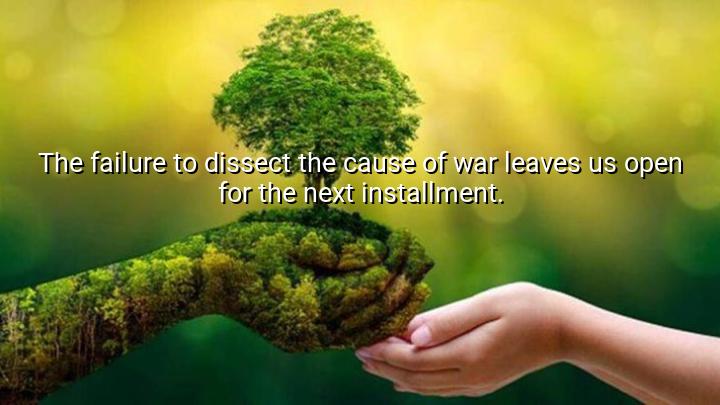




The quote by Chris Hedges, "The failure to dissect the cause of war leaves us open for the next installment," highlights the importance of understanding the root causes of conflict in order to prevent future wars. Hedges suggests that if we do not critically analyze and learn from the reasons behind wars, we are at risk of repeating the same mistakes and allowing new conflicts to arise. By not addressing the underlying issues, whether they are political, economic, or social, society leaves itself vulnerable to ongoing cycles of violence and destruction.
Hedges' statement calls for reflection and accountability in the aftermath of conflict. Understanding the causes of war—whether driven by power struggles, inequality, or miscommunication—can help societies make more informed decisions and create systems that prevent further escalation. Without this level of introspection, history risks repeating itself, as unresolved issues fester and lead to future confrontations. In essence, the failure to dissect the cause of war allows for ignorance, which in turn invites more conflict.
The origin of this quote can be traced to Hedges’ work as a journalist and war correspondent, where he reported on several global conflicts, including the Yugoslav Wars and the Iraq War. Through his experiences in war zones, Hedges witnessed firsthand the devastating consequences of unchecked aggression and failed diplomatic efforts. His writings often critique the role of governments and the media in perpetuating conflict, urging society to confront the causes of war before they lead to further violence.
Ultimately, Hedges’ quote serves as a warning about the dangers of ignoring the lessons of history. By failing to understand and address the causes of war, we risk perpetuating a cycle of conflict that harms individuals, nations, and the global community. The quote encourages a more thoughtful and analytical approach to global issues, focusing on prevention and sustainable peace rather than mere reaction.

AAdministratorAdministrator
Welcome, honored guests. Please leave a comment, we will respond soon