

Textile manufacturers use complicated chemical and industrial processes to make clothing materials, from cotton to synthetic fibers. And while the environmental consequences aren't always clear, consumption is growing.
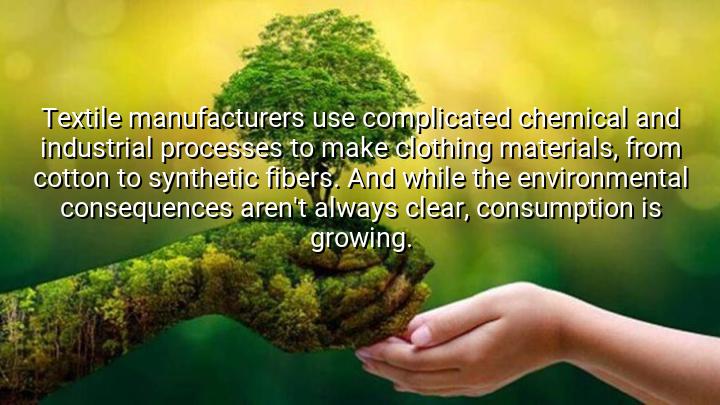




The quote by Tatiana Schlossberg highlights the environmental impact of the textile industry and the growing consumption of clothing materials. By stating, "Textile manufacturers use complicated chemical and industrial processes to make clothing materials, from cotton to synthetic fibers," Schlossberg draws attention to the intensive methods used to produce everyday garments. These processes often involve pollutants, energy consumption, and waste, which can have significant consequences for the environment, even if these effects are not immediately visible.
The meaning of this quote centers on the idea that the environmental costs of textile production are often hidden, yet they are significant and expanding due to rising consumer demand. Schlossberg emphasizes that while many people may focus on fashion or affordability, the industrial processes behind clothing can contribute to pollution, resource depletion, and ecological harm. It is a reminder that modern consumption patterns have direct and indirect effects on the planet, even if they are not always apparent.
In terms of origin, this quote comes from Tatiana Schlossberg, a journalist and environmental writer known for her work on climate change and sustainability. Her research often explores how everyday human activities, such as clothing consumption, intersect with larger environmental challenges. Schlossberg’s observations reflect a growing public concern about the fashion industry’s ecological footprint and the need for more sustainable production and consumption practices.
Ultimately, the quote underscores the tension between industrial production and environmental sustainability. Schlossberg encourages awareness of the hidden impacts of clothing manufacturing and urges consideration of how consumer behavior, industrial processes, and resource use collectively shape the health of the planet. It is both an informative and cautionary statement about the consequences of modern textile consumption.

AAdministratorAdministrator
Welcome, honored guests. Please leave a comment, we will respond soon