

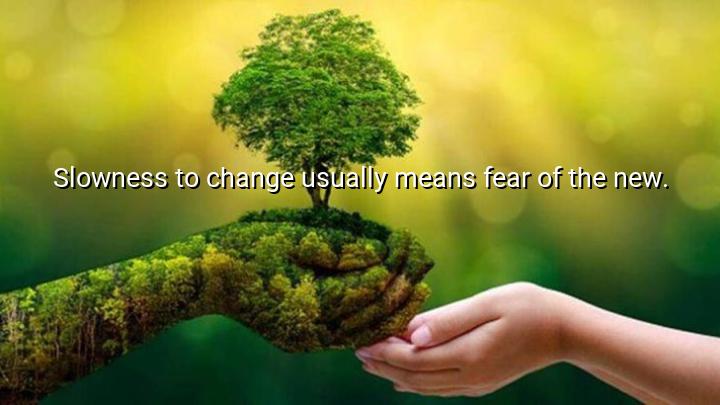
Slowness to change usually means fear of the new.




The quote “Slowness to change usually means fear of the new” is attributed to Phil Crosby, an influential businessman, quality management expert, and author of the bestselling book Quality Is Free. Crosby was known for his contributions to the field of business process improvement, especially in the area of zero defects and quality control. His quote reflects a keen understanding of organizational behavior and human psychology in the face of change.
At its core, the quote highlights the strong connection between resistance to change and fear. When individuals or organizations are slow to adapt, it’s often not due to laziness or logic, but because of an underlying anxiety about the unknown. New systems, ideas, or technologies can threaten familiar routines and create a sense of uncertainty, which many naturally seek to avoid. Crosby pinpoints this fear of the new as a key barrier to progress and improvement.
This insight is especially relevant in business and leadership contexts, where innovation and agility are crucial. Crosby believed that recognizing and addressing these fears was essential for encouraging growth and continuous improvement. By understanding that hesitation often stems from fear rather than reason, leaders can better support change through communication, training, and reassurance.
Ultimately, Crosby’s quote serves as a reminder that meaningful transformation requires not only planning and execution but also emotional awareness. To foster a culture of improvement, one must also build trust and confidence in the process of change. In both personal and professional realms, overcoming the fear of the new is essential for moving forward and embracing opportunity.

AAdministratorAdministrator
Welcome, honored guests. Please leave a comment, we will respond soon