

Praise God, from whom all blessings flow! Praise Him, all creatures here below! Praise Him above, ye heavenly host! Praise Father, Son, and Holy Ghost!
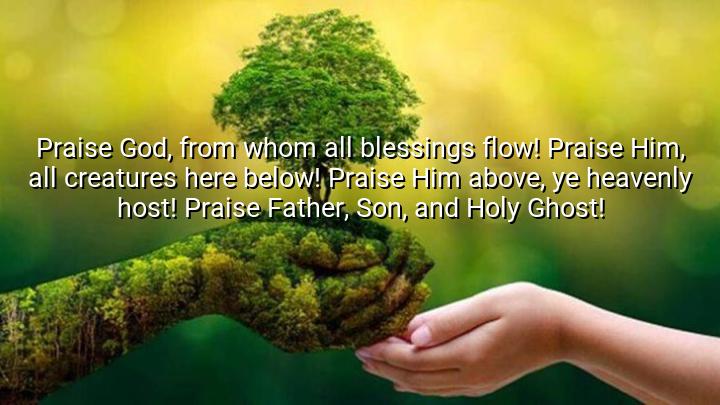




The quote "Praise God, from whom all blessings flow! Praise Him, all creatures here below! Praise Him above, ye heavenly host! Praise Father, Son, and Holy Ghost!" by Thomas Ken is a call to universal worship and adoration of the Trinity—God the Father, the Son, and the Holy Spirit. It is a hymn of praise that emphasizes the idea that all blessings and good things come from God, and therefore, all of creation, both earthly and heavenly, is called to offer praise to the divine. The hymn highlights the idea that God is worthy of praise from all beings, regardless of their realm or nature.
The lines invoke a sense of unity in worship, recognizing that all creatures, both on Earth and in Heaven, should join together in glorifying God. This reflects the idea of universal worship, where both humans and the heavenly host (angels and divine beings) are united in their adoration of the divine. The inclusion of "Praise Father, Son, and Holy Ghost" refers directly to the Christian doctrine of the Trinity, acknowledging the three persons of the one Godhead, each worthy of praise and worship.
The origin of this quote lies in Thomas Ken, a 17th-century Anglican bishop and hymn writer. He is best known for writing the hymn "Praise God, from whom all blessings flow," which is often used in Christian liturgies and services. Ken was an influential figure in the Anglican Church and a strong advocate for piety and personal devotion. His hymn emphasizes the importance of giving thanks and praise to God, reflecting his deep Christian convictions about the role of worship in daily life.
Ultimately, this quote serves as a reminder of the importance of worship and gratitude toward God. It calls upon all of creation to acknowledge the source of all blessings and to give glory to the divine. Through this hymn, Thomas Ken underscores the significance of honoring the Trinity and recognizing the presence of God in all aspects of life, both in the heavenly realm and on Earth.

AAdministratorAdministrator
Welcome, honored guests. Please leave a comment, we will respond soon