

Pragmatism is not always a good thing. Experience is not always a good thing.
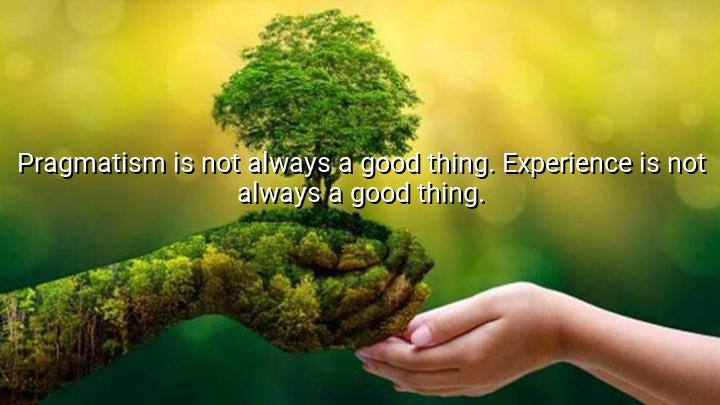




Keith Ellison’s quote, “Pragmatism is not always a good thing. Experience is not always a good thing,” challenges the conventional wisdom that both pragmatism and experience are always positive attributes. He suggests that while being pragmatic or experienced can be helpful in certain situations, they are not foolproof solutions. Pragmatism, often defined by practical decision-making, might sometimes limit creativity or the willingness to consider new ideas. Similarly, experience can sometimes lead to a narrow or rigid perspective, where individuals rely too heavily on past lessons, making it difficult to adapt to new challenges or think outside the box.
The quote implies that both pragmatism and experience can lead to complacency. Pragmatism, while often seen as a way to solve problems efficiently, can sometimes prevent people from challenging the status quo or pursuing innovative solutions. Likewise, having too much experience can make one less open to change or new approaches, as previous methods and successes might overshadow the potential for growth and learning. In essence, Ellison is cautioning against becoming too attached to these concepts if they prevent progress or new ways of thinking.
Ellison’s words also reflect a deeper philosophical critique of how society values pragmatic and experienced individuals. While these traits are often seen as virtues, the quote suggests that they can sometimes lead to a limited understanding or the overlooking of possibilities that require unconventional or innovative thinking. This perspective encourages people to be more open-minded and willing to break free from the confines of practicality or past experiences.
The origin of this quote stems from Keith Ellison’s work as a politician and advocate for progressive change. As the first Muslim elected to the U.S. Congress, Ellison often speaks out against entrenched systems of power that resist change. His perspective reflects his broader commitment to social justice and his belief in the importance of thinking beyond traditional solutions to address modern issues. The quote speaks to his philosophy of challenging norms and embracing new, transformative approaches.

AAdministratorAdministrator
Welcome, honored guests. Please leave a comment, we will respond soon