

Poets are the sense, philosophers the intelligence of humanity.
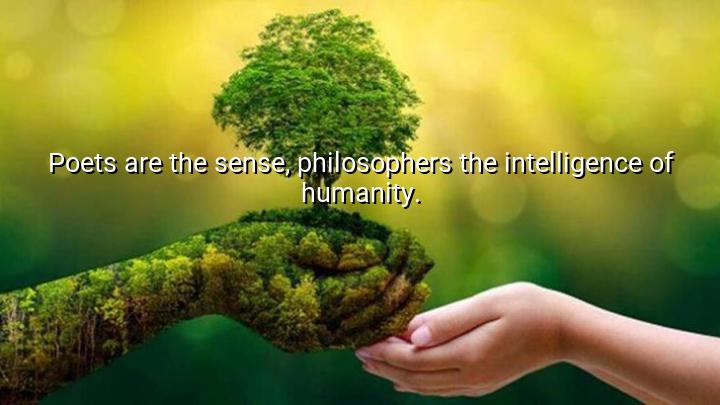




The quote "Poets are the sense, philosophers the intelligence of humanity" by Samuel Beckett suggests a division between two different yet complementary roles in shaping human understanding. Poets, in Beckett's view, represent the sense of humanity—the intuitive, emotional, and sensory aspect of human experience. They express the deeper, often unspoken truths of existence through language and metaphor, tapping into the emotional and subconscious realms of the human condition. Philosophers, on the other hand, represent the intelligence—the logical, analytical, and rational side of human thought. They explore the structures of existence through reason, questioning, and intellectual inquiry.
Beckett’s statement reflects his broader view of art and philosophy, where both play essential roles in human life but function in different ways. Poets capture the subjective experience of being human, while philosophers provide the framework for understanding that experience. In this way, poets provide the senses that give life its emotional and existential weight, while philosophers provide the intellectual tools to make sense of those feelings and experiences. Together, they create a fuller picture of what it means to be human.
The origin of this quote can be understood through Beckett’s own literary works, which often grapple with the tension between emotion and reason. As a playwright, novelist, and poet, Beckett was deeply invested in the complexity of human existence, often portraying characters caught in a struggle between their emotional responses to the world and their intellectual efforts to understand it. His works, such as Waiting for Godot, show a profound engagement with both the absurdity of existence and the intellectual attempts to make sense of it.
Ultimately, Beckett’s words remind us of the balance between feeling and thinking in the human experience. While philosophy seeks to explain the world through logic and structure, poetry invites us to experience and feel that world in a way that transcends rational thought. Together, they form two sides of the same coin, offering us a richer, more nuanced understanding of humanity.

AAdministratorAdministrator
Welcome, honored guests. Please leave a comment, we will respond soon