

One of the things that has to be faced is the process of waiting to change the system, how much we have got to do to find out who we are, where we have come from and where we are going.
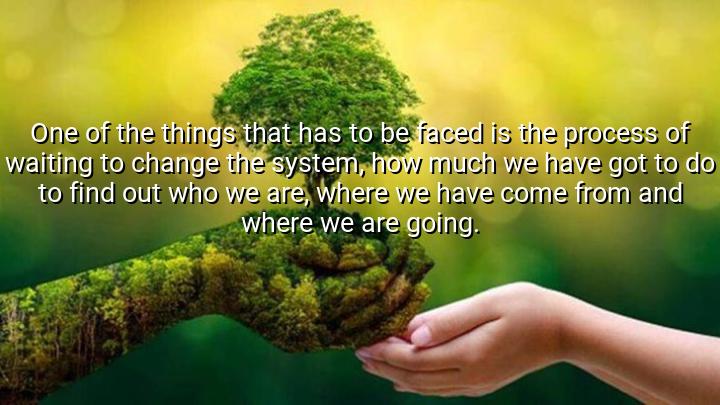




The quote by Ella Baker, "One of the things that has to be faced is the process of waiting to change the system, how much we have got to do to find out who we are, where we have come from and where we are going," highlights the deep and often slow journey toward social transformation. Baker acknowledges the frustration of having to wait for meaningful change, especially when confronting entrenched systems of inequality. However, she also emphasizes that this process involves more than just external action—it requires introspection and self-discovery.
The phrases "who we are," "where we have come from," and "where we are going" suggest that true progress comes not only from fighting external battles but also from understanding our identity, history, and purpose. For Baker, transforming society demands both collective action and individual awareness, a blending of the political and the personal. It’s not just about changing laws or institutions—it’s about redefining how people see themselves and their communities within those systems.
Ella Baker was a pivotal figure in the American civil rights movement, known for her grassroots organizing, mentorship, and belief in participatory democracy. She worked alongside major organizations like the NAACP, SCLC, and helped found the Student Nonviolent Coordinating Committee (SNCC). Her leadership style emphasized empowering ordinary people to become agents of change, rather than relying solely on charismatic leaders.
Ultimately, Baker’s quote serves as a reminder that systemic change is both a long-term effort and a deeply reflective process. While it may be slow and often difficult, it is grounded in the work of understanding and reclaiming our roots to chart a more just and purposeful future. Her words call for patience, persistence, and a commitment to personal and collective growth.

AAdministratorAdministrator
Welcome, honored guests. Please leave a comment, we will respond soon