

Notice the difference between what happens when a man says to himself, I have failed three times, and what happens when he says, I am a failure.
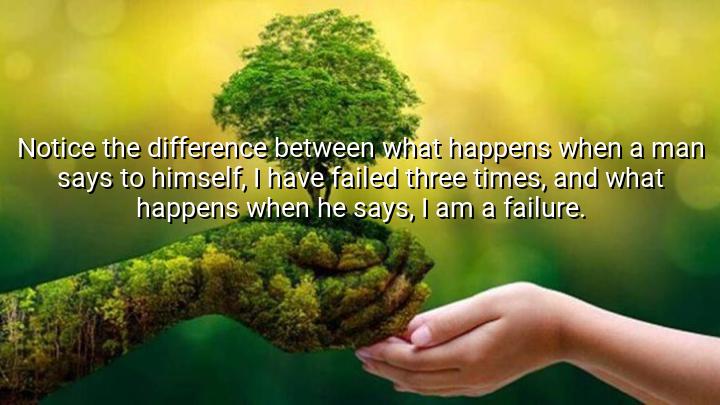




The quote "Notice the difference between what happens when a man says to himself, I have failed three times, and what happens when he says, I am a failure" by S. I. Hayakawa highlights the power of language and self-perception. Hayakawa draws a distinction between viewing failure as a temporary experience versus an identity. When a person says, "I have failed," they acknowledge that failure is a momentary setback that doesn’t define them, and they can move on from it. However, saying "I am a failure" means they internalize that failure, adopting it as part of their identity, which can lead to negative self-beliefs and a lack of motivation to try again.
The origin of this quote comes from S. I. Hayakawa, a linguist, educator, and former U.S. Senator, who was known for his work on language and its impact on human behavior. Hayakawa believed that the words we use shape our thoughts, beliefs, and actions. In this quote, he emphasizes the importance of self-talk and how the language we use to describe our experiences can influence our future outcomes. By framing failure as something we experience rather than something we become, we can maintain a healthier and more positive mindset.
Hayakawa’s insight also touches on the concept of growth mindset, where failure is seen as a natural and necessary part of the learning process. By separating our identity from our mistakes, we can continue to grow and improve. Self-identity plays a crucial role in shaping how we respond to challenges, and self-compassion allows us to view setbacks as opportunities for growth rather than as permanent shortcomings.
In a broader sense, this quote reminds us of the power of language in shaping our reality. How we speak to ourselves can either hinder or encourage personal progress. By choosing to see failure as an event rather than a permanent state, we open ourselves up to resilience, learning, and future success. Hayakawa's words encourage us to cultivate a mindset where we can experience failure without letting it define who we are.

AAdministratorAdministrator
Welcome, honored guests. Please leave a comment, we will respond soon