

Nothing is more sad than the death of an illusion.
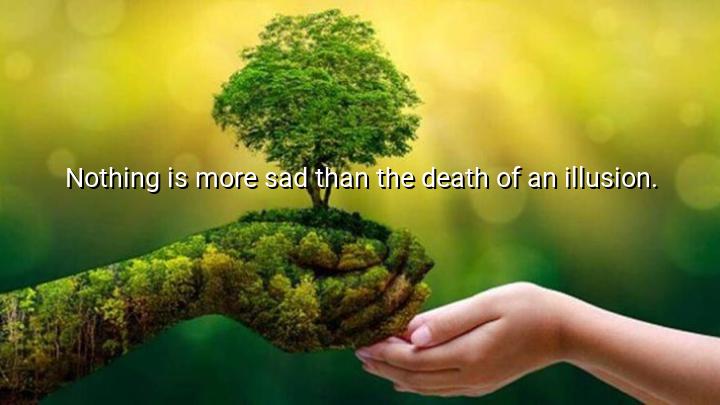




Arthur Koestler's quote, "Nothing is more sad than the death of an illusion," speaks to the profound sense of loss and disillusionment that comes when something we believed to be true or perfect turns out to be false or unattainable. An illusion often represents hope, dreams, or an idealized version of reality, and when it fades or is shattered, it leaves behind a deep emptiness. Koestler emphasizes the emotional weight of losing these beliefs or expectations, suggesting that the impact of such a loss can be far more painful than a tangible loss like death.
The quote reflects the inner turmoil that occurs when we are forced to confront the truth behind our illusions. Whether it’s a personal dream, a societal ideal, or a romanticized vision of the world, when these illusions are dispelled, the result can be overwhelming. The sadness here is not just about the loss of a belief, but about the disillusionment that follows, which often leaves us grappling with a more bitter reality.
Koestler, known for his writings on political and psychological themes, frequently explored the human experience of conflict and existential crisis. His work often dealt with the tension between idealism and the harsh realities of the world. This quote encapsulates his view that idealism, though it can provide hope and direction, may ultimately lead to disappointment and a painful awakening when confronted with the truth.
The origin of this quote lies in Koestler's exploration of human nature and the psychological effects of illusion. It speaks to the fragility of human hope and belief, and how we often create illusions to cope with the complexities of life. When these illusions are broken, the emotional pain of realizing that they were never real can be more devastating than the loss of something concrete.

AAdministratorAdministrator
Welcome, honored guests. Please leave a comment, we will respond soon