

Not what we experience, but how we perceive what we experience, determines our fate.
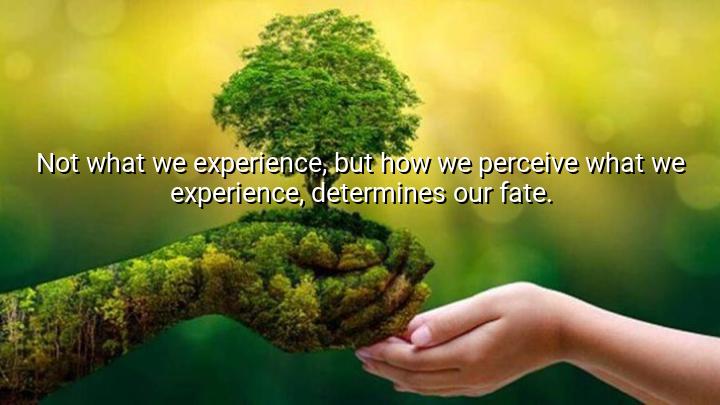




The quote "Not what we experience, but how we perceive what we experience, determines our fate" by Marie von Ebner-Eschenbach highlights the powerful role of perception in shaping our lives. It suggests that the events or circumstances we go through are not the ultimate factors that decide our destiny. Instead, it is our interpretation and response to those events that truly influence the course of our lives. This perspective emphasizes the subjective nature of reality, where two people might face the same situation but experience vastly different outcomes depending on their mindset.
Marie von Ebner-Eschenbach, an Austrian writer from the 19th century, was known for her profound insights into human psychology and philosophy. Her work often explored themes of self-awareness, resilience, and the human condition. The quote reflects her belief that individuals have the inner power to shape their futures, regardless of external circumstances, through the way they choose to perceive and engage with their experiences.
The essence of this idea can also be linked to various philosophical and psychological traditions, such as Stoicism and cognitive-behavioral theory, which teach that our thoughts and attitudes govern how we feel and act in response to life’s challenges. By focusing on changing our perspective rather than trying to control external events, we gain a sense of agency and freedom.
Ultimately, the quote serves as a reminder that fate is not fixed by what happens to us, but is malleable through our perception. It encourages us to cultivate a positive, mindful approach to life, empowering us to transform difficulties into growth and opportunity.

AAdministratorAdministrator
Welcome, honored guests. Please leave a comment, we will respond soon