

My main point here is that if you are the child of God and God is a part of you, the in your imagination God suppose to look like you. And when you accept a picture of the deity assigned to you by another people, you become the spiritual prisoners of that other people.
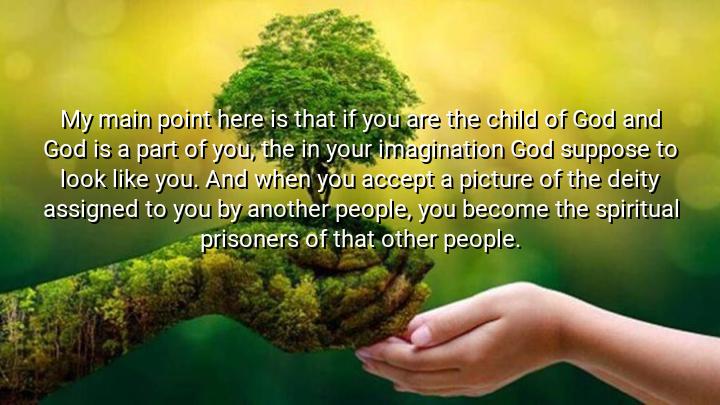




The quote "My main point here is that if you are the child of God and God is a part of you, then in your imagination God is supposed to look like you. And when you accept a picture of the deity assigned to you by other people, you become the spiritual prisoners of that other people" by John Henrik Clarke speaks to the relationship between individual identity and the concept of God. Clarke argues that if one believes in being a child of God and sees God as a part of themselves, then their vision of the divine should reflect their own identity and experience. By accepting an image of God that was constructed by others, however, a person relinquishes their personal connection to the divine and becomes subjugated to the beliefs and perspectives of those who created that image.
Clarke’s point is that the divine is deeply personal and should resonate with one’s own sense of self, rather than being defined by external influences. The idea that God reflects one's own image underscores the belief that we each have the ability to understand the divine in ways that are connected to our own culture, heritage, and personal experiences. Accepting an external image of God means abandoning this personal relationship and adhering to someone else’s interpretation, which limits spiritual freedom and autonomy.
This concept is a critique of how religious or spiritual ideologies are sometimes imposed by others, often leading individuals to adopt beliefs that do not reflect their own inner truths or values. Clarke’s words challenge the idea of universalization in spiritual beliefs, suggesting that embracing an external image of God can lead to spiritual imprisonment by conforming to the authority and doctrine of others, rather than fostering personal empowerment.
The origin of this quote lies in Clarke’s work as an historian, educator, and activist who focused on African history and the liberation of African peoples. Clarke often spoke out against cultural imposition and the need for self-awareness and empowerment in both individual and collective identities. His teachings encouraged people to reclaim their own spiritual and historical narratives, and this quote reflects his belief in the importance of seeing the divine through a personal, unfiltered lens.

AAdministratorAdministrator
Welcome, honored guests. Please leave a comment, we will respond soon