

Money spent on carbon cuts is money we can't use for effective investments in food aid, micronutrients, HIV/AIDS prevention, health and education infrastructure, and clean water and sanitation.
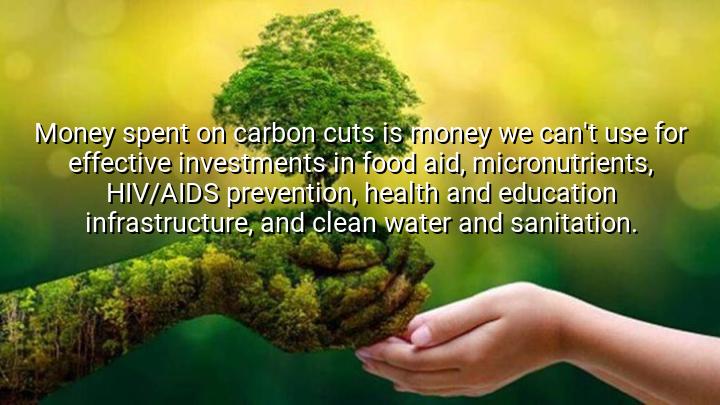




In this quote, Bjorn Lomborg argues that spending money on carbon cuts—efforts to reduce carbon emissions—diverts funds away from other critical areas that he believes could have a more direct and immediate impact on human well-being. He suggests that the money used to address climate change could be better spent on food aid, micronutrients, HIV/AIDS prevention, health and education infrastructure, and clean water and sanitation. Lomborg is making the case that addressing basic human needs should take priority over long-term environmental concerns, especially when resources are limited.
Lomborg’s statement reflects his broader perspective on cost-benefit analysis in global policy. He is known for advocating for solutions that provide the greatest benefit in the most cost-effective manner. His position challenges the emphasis placed on tackling climate change through carbon cuts, suggesting that the immediate needs of vulnerable populations should be addressed first, as these investments can have a direct and significant impact on public health and quality of life.
The origin of this quote comes from Lomborg's work as an economist and author, particularly in his book The Skeptical Environmentalist, where he argues that resources should be allocated efficiently, focusing on initiatives that will do the most good for humanity in the short term. His views often spark debate, as they contrast with the mainstream environmental perspective, which prioritizes urgent action on climate change. Lomborg advocates for a balanced approach that weighs both environmental and human development priorities.
Ultimately, Lomborg’s quote encourages a re-evaluation of global priorities, proposing that investments in basic human needs like health and education should not be sidelined in favor of long-term climate goals. He emphasizes the importance of making practical, cost-effective decisions that can improve life for the most vulnerable populations today, while still addressing environmental concerns over time.

AAdministratorAdministrator
Welcome, honored guests. Please leave a comment, we will respond soon