

In the rich world, the environmental situation has improved dramatically. In the United States, the most important environmental indicator, particulate air pollution, has been cut by more than half since 1955, rivers and coastal waters have dramatically improved, and forests are increasing.
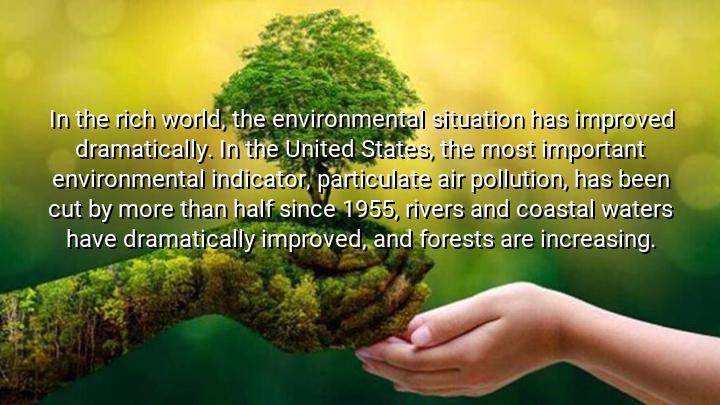




The quote by Bjorn Lomborg, “In the rich world, the environmental situation has improved dramatically. In the United States, the most important environmental indicator, particulate air pollution, has been cut by more than half since 1955, rivers and coastal waters have dramatically improved, and forests are increasing,” emphasizes the progress made in environmental management in developed countries. Lomborg, a Danish author and policy analyst, highlights measurable improvements in air quality, water quality, and forest coverage, challenging the perception that environmental decline is inevitable.
The meaning of the quote revolves around the idea that effective policy, technological advances, and public awareness can lead to significant environmental improvements. By citing particulate air pollution, water quality, and forest expansion, Lomborg demonstrates that concerted efforts and investment in environmental protection yield tangible results, suggesting that human intervention can reverse ecological damage in certain contexts.
The origin of the quote comes from Lomborg’s work on global environmental issues and public policy, particularly in books like The Skeptical Environmentalist. He frequently uses empirical data to assess environmental trends, arguing that progress is possible and ongoing, especially in wealthier nations where resources and governance structures support sustainable practices.
Overall, the quote serves as a reminder that environmental challenges are not insurmountable. Lomborg emphasizes that with strategic planning, regulation, and technology, developed countries can achieve measurable improvements, highlighting the importance of data-driven solutions and continued environmental stewardship.

AAdministratorAdministrator
Welcome, honored guests. Please leave a comment, we will respond soon