

Modern conveniences grant us more free time to focus on spiritual needs and devote more time to personal service. But the basic element which should never change in the lives of righteous young women is giving service to others.
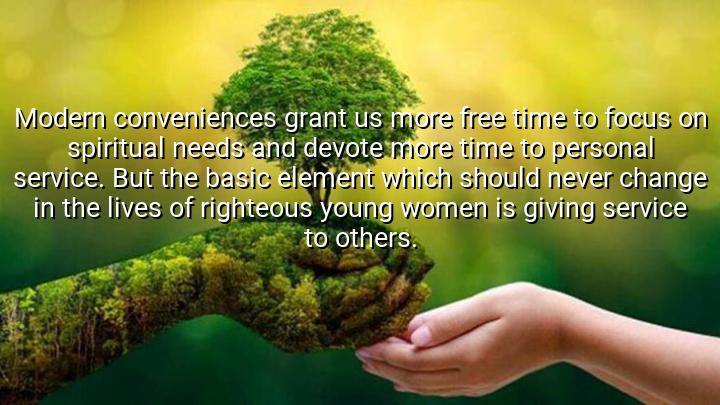




The quote "Modern conveniences grant us more free time to focus on spiritual needs and devote more time to personal service. But the basic element which should never change in the lives of righteous young women is giving service to others." by James E. Faust emphasizes the enduring importance of service, especially for young women striving to live righteously. Faust, a prominent leader in The Church of Jesus Christ of Latter-day Saints (LDS Church), often spoke about the values of compassion, faith, and duty to others. This quote reflects his belief that while times and technologies may change, the core principles of discipleship and charity must remain constant.
Faust begins by acknowledging that modern conveniences—such as technology and household improvements—have alleviated many of life’s time-consuming burdens. With these advancements, individuals are afforded more opportunities to turn their attention inward, nurturing spiritual growth, and outward, offering personal service to those in need. In this way, progress becomes a platform for greater compassion, rather than an excuse for disengagement.
The heart of the quote lies in the declaration that "giving service to others" is a non-negotiable element of a faithful life. Specifically addressing young women, Faust reinforces the idea that selflessness, kindness, and ministering to others are timeless virtues. Regardless of the era or setting, acts of charity and love build character and strengthen communities, making service a vital part of both spiritual development and human connection.
Ultimately, James E. Faust’s message is a call to use the privileges of modern life not for selfish gain but for higher purposes. He reminds us that while the world around us evolves, the principle of serving others remains a defining measure of righteousness, purpose, and spiritual fulfillment—especially in the lives of the rising generation.

AAdministratorAdministrator
Welcome, honored guests. Please leave a comment, we will respond soon