

Men do change, and change comes like a little wind that ruffles the curtains at dawn, and it comes like the stealthy perfume of wildflowers hidden in the grass.
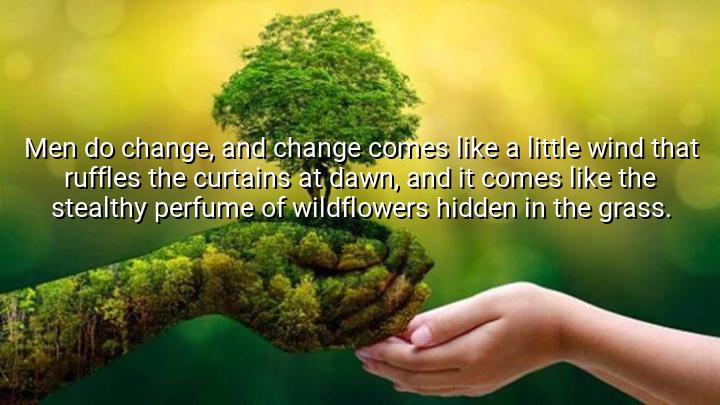




The quote “Men do change, and change comes like a little wind that ruffles the curtains at dawn, and it comes like the stealthy perfume of wildflowers hidden in the grass” by John Steinbeck beautifully captures the subtle, often unnoticed nature of personal transformation. Steinbeck likens change to delicate, almost imperceptible phenomena—a gentle breeze at daybreak, or the faint scent of wildflowers. Through this poetic imagery, he suggests that change doesn’t always arrive with drama or force; more often, it emerges quietly, revealing itself only when one takes the time to observe.
John Steinbeck, one of America's most influential 20th-century authors, was known for his deep empathy and lyrical portrayals of ordinary people navigating hardship and growth. This quote reflects his nuanced understanding of human nature—that people are capable of evolving, but that this process is frequently slow, organic, and rooted in the subtle shifts of everyday life. Rather than being disruptive, Steinbeck’s vision of change is natural and graceful.
The metaphor of the "little wind" and "stealthy perfume" serves to remind us that change can be gentle, even beautiful, rather than something to fear. Often, these small internal shifts accumulate over time and lead to meaningful transformation. It contrasts sharply with the more common narrative that change is difficult and dramatic, offering a more hopeful, tender perspective on how growth occurs.
Ultimately, Steinbeck's quote encourages patience and awareness. It urges us to trust the quiet processes within ourselves and others, recognizing that inner change may begin in ways we don’t immediately see. His words are a celebration of the quiet resilience and beauty of the human spirit, gently evolving with time and experience.

AAdministratorAdministrator
Welcome, honored guests. Please leave a comment, we will respond soon