

Maybe this isn't a common thought that goes through one's mind when considering children, but I think about the ramifications of climate change and how the extreme weather conditions will only get worse as we keep drilling for oil and fracking for natural gas. Do I want to bring a little human into that mix?
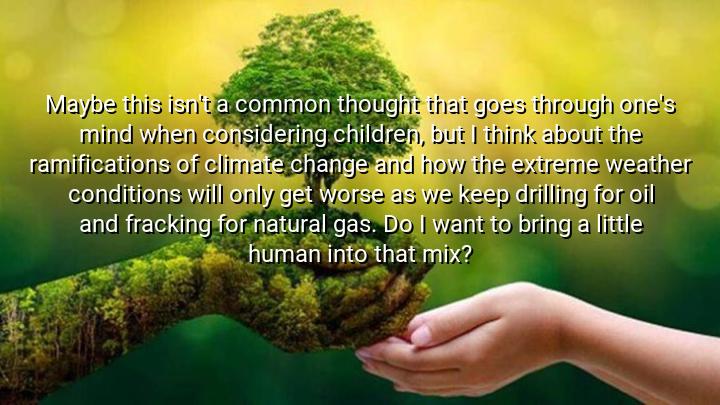




The quote “Maybe this isn't a common thought that goes through one's mind when considering children, but I think about the ramifications of climate change and how the extreme weather conditions will only get worse as we keep drilling for oil and fracking for natural gas. Do I want to bring a little human into that mix?” by Ana Kasparian captures a deeply personal and socially conscious reflection on the intersection of parenthood and environmental responsibility. Kasparian, a journalist and co-host of The Young Turks, is known for her candid commentary on politics, climate justice, and social issues.
In this quote, Kasparian raises the often unspoken concern many people today share: the ethical dilemma of bringing new life into a world increasingly threatened by environmental degradation. By focusing on climate change, specifically the ongoing reliance on fossil fuels like oil and natural gas obtained through drilling and fracking, she highlights the connection between human choices and the worsening state of the planet. Her worry stems not from pessimism but from a sense of moral responsibility toward future generations.
The mention of extreme weather conditions serves as a reminder of the tangible impacts of climate change—rising temperatures, floods, wildfires, and droughts—that are already affecting millions around the globe. Kasparian questions whether it is fair or wise to introduce a child into a world that may become increasingly unstable, not just environmentally, but also socially and economically, due to the fallout from a warming planet.
Ultimately, this quote is a powerful example of how climate anxiety is shaping even the most intimate aspects of personal life, such as the decision to become a parent. It underscores the urgent need for sustainable policies, collective action, and deeper reflection about the long-term consequences of today’s energy practices. Kasparian’s words challenge us to think beyond convenience and tradition, and to grapple with the broader ethical implications of living in—and contributing to—an unsustainable world.

AAdministratorAdministrator
Welcome, honored guests. Please leave a comment, we will respond soon