

Man's sin is in his failure to live what he is. Being the master of the earth, man forgets that he is the servant of God.
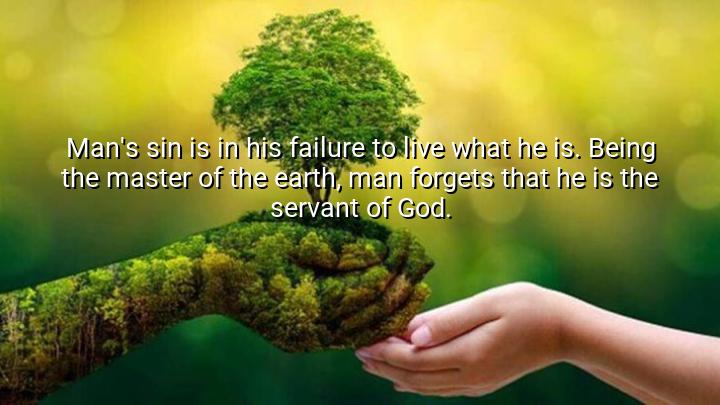




The quote by Abraham Joshua Heschel, "Man's sin is in his failure to live what he is. Being the master of the earth, man forgets that he is the servant of God," reflects Heschel’s view on the spiritual and moral responsibilities of humanity. Heschel suggests that sin is not just about specific actions, but about neglecting the true purpose of life—failing to live in alignment with one's higher calling or spiritual identity. In his view, human beings, by focusing on their dominance over the earth, forget their true role as servants of God, which leads to a disconnection from their moral and spiritual duties.
The quote highlights the danger of human arrogance and the tendency to prioritize earthly power over spiritual wisdom. Heschel is concerned with humanity's tendency to view themselves as the ultimate masters of the world, neglecting the fact that their power and purpose should be guided by a higher moral and divine authority. This forgetfulness of one's role as a servant to God is at the core of Heschel’s interpretation of sin—a failure to live authentically in accordance with the divine will.
The origin of this quote comes from Abraham Joshua Heschel, a Jewish philosopher and theologian, known for his work on spirituality, ethics, and the human connection to God. Heschel’s ideas were deeply influenced by his commitment to both Jewish teachings and social justice. His perspective on humanity's relationship with God emphasizes the importance of humility, awareness, and the responsibility humans have in serving God through their actions, rather than seeking power or dominion over nature.
Ultimately, Heschel’s quote serves as a profound reminder about the importance of spiritual humility and responsibility. It urges individuals to remember their spiritual duties and avoid the trap of becoming overly focused on material or earthly power. By recognizing our role as servants of a higher divine will, humans can live more meaningfully, in harmony with both God and the world around them.

AAdministratorAdministrator
Welcome, honored guests. Please leave a comment, we will respond soon