

Man needs, for his happiness, not only the enjoyment of this or that, but hope and enterprise and change.
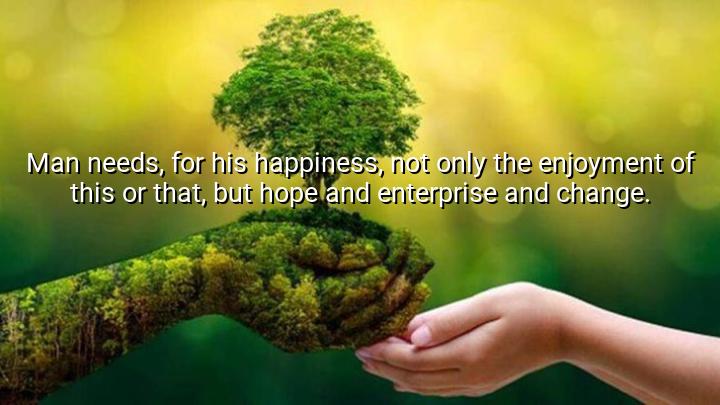




This quote by Bertrand Russell, “Man needs, for his happiness, not only the enjoyment of this or that, but hope and enterprise and change,” explores the deeper elements of human fulfillment. Russell argues that happiness is not merely about enjoying material comforts or fleeting pleasures; it is also about possessing a sense of purpose, ambition, and a willingness to embrace transformation. He suggests that lasting happiness comes from a combination of emotional satisfaction and dynamic engagement with life.
The inclusion of words like hope, enterprise, and change underscores Russell’s belief in the importance of growth and forward motion. Hope provides the emotional energy to look beyond the present, enterprise gives us the drive to act and build, and change keeps life stimulating and evolving. Without these elements, even a comfortable life can become stagnant and unfulfilling. Russell presents a view of happiness that is rooted in both mental vitality and active pursuit.
As a British philosopher, logician, and Nobel Prize-winning author, Bertrand Russell wrote extensively on ethics, human behavior, and social progress. This quote likely originates from his writings on the philosophy of happiness or social criticism, where he often challenged conventional thinking and championed intellectual freedom and personal growth. Russell believed that individuals thrive not just on comfort, but on challenges that foster development and curiosity.
Ultimately, the quote is a reminder that true happiness is multi-dimensional. It requires not only the enjoyment of present pleasures, but also a vision for the future, meaningful action, and the flexibility to adapt. Russell’s insight continues to resonate today, especially in a world where many seek deeper meaning beyond surface-level success. His words encourage us to find joy not just in what we have, but in what we strive to become.

AAdministratorAdministrator
Welcome, honored guests. Please leave a comment, we will respond soon