

Man, I don't want to have nothing to do with computers. I don't want the government in my business.
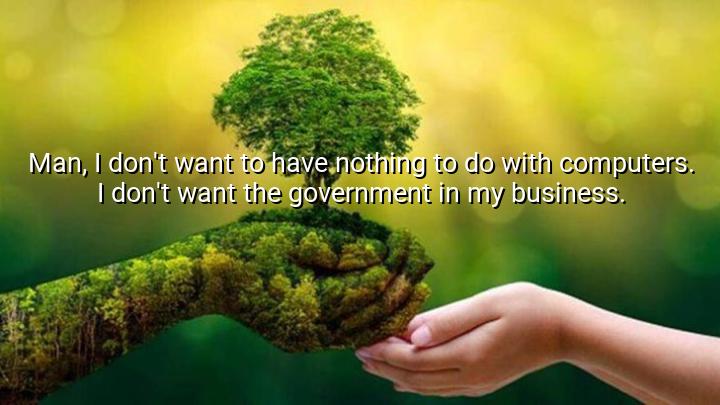




The quote by Erykah Badu, "Man, I don't want to have nothing to do with computers. I don't want the government in my business," expresses a sense of skepticism and distrust towards both modern technology and governmental oversight. Badu’s statement reflects concerns about privacy, autonomy, and the growing presence of both computers and the government in personal lives. She is voicing a resistance to being controlled or monitored through the use of technology, particularly when it comes to the invasive nature of digital systems that track and store personal information.
Erykah Badu, known for her soulful music and bold views, often challenges societal norms and encourages independence. This quote echoes her broader stance on maintaining personal freedom and resisting systems that infringe on individual privacy. In an era where technology increasingly monitors and influences daily life, Badu’s reluctance reflects a desire to preserve personal space and reject external interference, especially from powerful institutions like the government.
The quote also taps into a broader cultural conversation about privacy and the relationship between technology and individual rights. As computers and digital systems continue to permeate everyday life, many people share concerns about the surveillance potential of these technologies, as well as their use by the government for data collection and control. Badu’s words highlight a growing unease around these developments, calling attention to the possible negative effects of technological dependence.
In essence, Badu's statement is a reminder to critically examine the role of computers and technology in society, particularly in relation to how they can be used to monitor and control people. It challenges us to think about the balance between progress and privacy, and whether it’s possible to navigate a digital world without compromising personal freedom.

AAdministratorAdministrator
Welcome, honored guests. Please leave a comment, we will respond soon