

Man dies of cold, not of darkness.
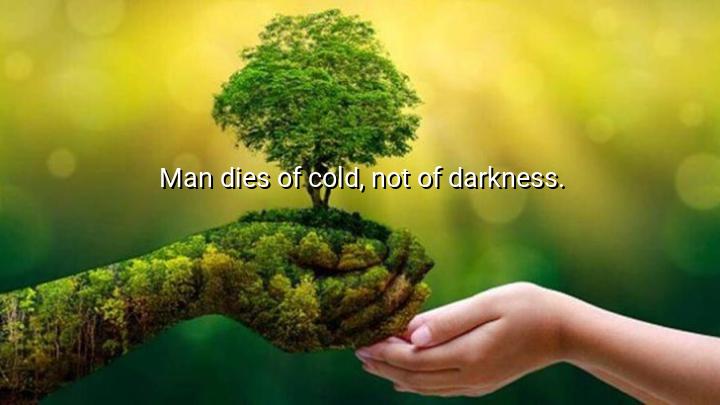




Miguel de Unamuno’s quote, "Man dies of cold, not of darkness," uses metaphorical language to suggest that it is indifference and apathy—symbolized by cold—that ultimately lead to the decline of the human spirit, rather than the challenges or suffering that arise from the unknown or uncertainty, represented by darkness. The quote contrasts two forces: cold and darkness, both of which can be harsh, but while darkness may represent ignorance or difficulty, it is the absence of warmth (or the lack of human connection, empathy, or purpose) that is far more detrimental in the long term. Emotional detachment or loneliness, represented by cold, can cause a more profound and gradual decline in individuals than the fear of the unknown or difficult circumstances symbolized by darkness.
Unamuno's words also emphasize the importance of human warmth—not just physical warmth, but the spiritual or emotional connections that keep people alive and engaged. Coldness, whether emotional or social, can create a sense of isolation that is far more dangerous than the challenges that come with facing darkness or the unknown. This view aligns with his broader philosophical perspective on the human condition, where he often explored themes of faith, suffering, and the search for meaning in life.
The quote can also be interpreted as a commentary on society. In an age where people may become consumed with materialism or individualism, they risk losing the vital warmth that comes from being connected to others and working toward a shared purpose. The "cold" becomes a metaphor for these disconnected, isolating forces that gradually lead to a loss of vitality and meaning in life. Darkness, in this case, might symbolize the challenges of life, but it’s the absence of warmth and hope that leads to destruction.
The origin of this quote comes from Miguel de Unamuno, a Spanish writer, philosopher, and academic. Unamuno’s works frequently addressed the complexities of existence, faith, and the human search for meaning. He was deeply concerned with the nature of life and death, and his works often reflect his belief that human beings need to engage with both the challenges and relationships that make life meaningful. This quote is a testament to his belief in the importance of warmth—whether emotional, intellectual, or spiritual—in keeping the human spirit alive.

AAdministratorAdministrator
Welcome, honored guests. Please leave a comment, we will respond soon