

Let each man think himself an act of God, His mind a thought, his life a breath of God; And let each try, by great thoughts and good deeds, To show the most of Heaven he hath in him.
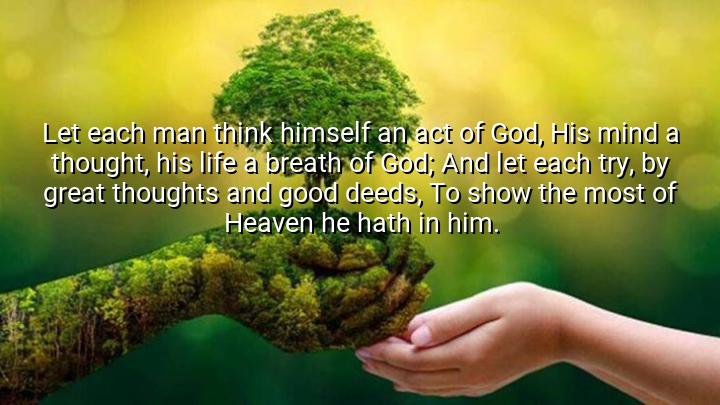




Philip James Bailey’s quote, “Let each man think himself an act of God, His mind a thought, his life a breath of God,” encourages individuals to see themselves as an integral part of divine creation. Bailey suggests that each person should recognize their existence as a reflection of a higher power, and that their thoughts and actions are connected to something greater than themselves. This perspective emphasizes self-worth and encourages people to view themselves as capable of manifesting the divine through their mind and life.
The quote continues with the idea that individuals should strive to demonstrate their connection to the divine by engaging in great thoughts and good deeds. By doing so, they can show the Heaven within them—expressing their spiritual potential and bringing about positive change in the world. Bailey’s words suggest that human beings are not just passive recipients of divine inspiration but active agents who can express their inherent goodness and holiness through action.
This call to action reflects Bailey's belief that moral and spiritual excellence are part of each person’s purpose. It emphasizes that living a life that is aligned with divine will is not about grand gestures, but about consistently striving for goodness through thought and deed. By aspiring to live this way, people can bring more light and positivity into the world, serving as living expressions of Heaven on Earth.
The origin of the quote comes from Philip James Bailey, an English poet known for his work Festus, which explores themes of spirituality, humanity, and the quest for meaning. Bailey's poetry often delves into the relationship between human beings and the divine, and this quote reflects his broader views on personal responsibility and the potential for individuals to express their spiritual nature through compassion and virtue.

AAdministratorAdministrator
Welcome, honored guests. Please leave a comment, we will respond soon