

Land is a great example of how we can manage and invest in sustainable infrastructure for economic, social, and environmental gains. Its use - and misuse - is at the heart of the challenge for food, fuel, and fibre.
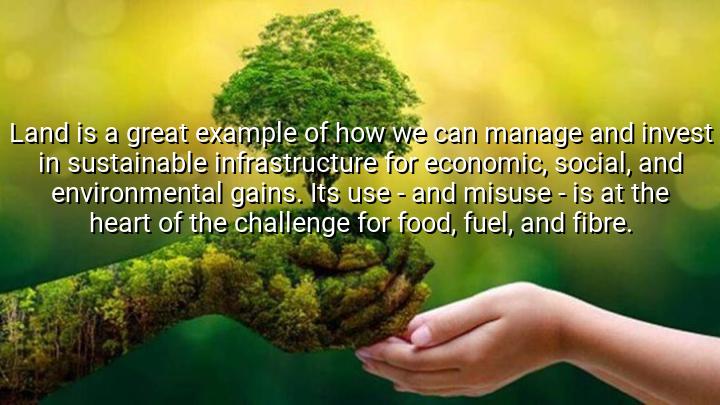




Paul Polman’s quote highlights the critical role of land in addressing some of the most pressing global challenges, specifically in the areas of food, fuel, and fibre. He emphasizes that land is not only a valuable resource but also a focal point for sustainable infrastructure. When managed properly, land can provide substantial economic, social, and environmental gains, making it a cornerstone of sustainable development. However, Polman also acknowledges that misuse of land—whether through deforestation, poor agricultural practices, or land degradation—can exacerbate many of these challenges.
The quote underscores the importance of sustainable land management as a key factor in promoting long-term benefits for people and the planet. Polman draws attention to how the use of land for agriculture, energy production, or urbanization must be approached in a way that maintains its ecological health, ensuring that it continues to meet the needs of future generations. This idea reflects a broader trend in sustainable development, where the goal is to balance economic growth with the preservation of natural resources.
Polman’s words are rooted in his experience as a business leader and advocate for corporate responsibility. He has consistently championed the idea that companies and governments must take an integrated approach to sustainability, addressing the interconnected challenges of environmental protection, economic growth, and social equity. His focus on land as a key asset in this equation aligns with his broader views on creating value that benefits both society and the environment.
The reference to land as central to the challenges of food security, energy needs, and raw materials also reflects ongoing debates about the intersection of land use and climate change. Properly managing land can help ensure that we can meet global needs without compromising biodiversity or exacerbating environmental issues. Polman’s quote encourages us to rethink how we view and use land, promoting sustainable practices that contribute to a more resilient future.

AAdministratorAdministrator
Welcome, honored guests. Please leave a comment, we will respond soon