

Knowledge can be communicated, but not wisdom. One can find it, live it, be fortified by it, do wonders through it, but one cannot communicate and teach it.
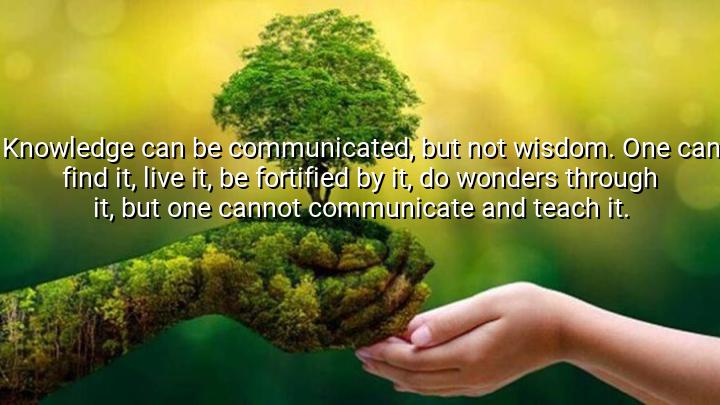




The quote, “Knowledge can be communicated, but not wisdom. One can find it, live it, be fortified by it, do wonders through it, but one cannot communicate and teach it,” is attributed to Hermann Hesse, the German-Swiss poet, novelist, and painter best known for works like Siddhartha and Steppenwolf. Hesse’s writings often explore themes of spirituality, self-discovery, and the tension between intellect and inner experience. This statement reflects his distinction between knowledge, which can be taught through words and instruction, and wisdom, which must be personally discovered and lived.
The first part, “knowledge can be communicated, but not wisdom,” underscores the difference between information and deeper understanding. Knowledge consists of facts, concepts, and skills that can be shared through teaching and learning. Wisdom, however, is experiential—it is shaped by personal journeys, reflection, and inner transformation, making it something that cannot simply be handed down.
The second part, “one can find it, live it, be fortified by it, do wonders through it,” highlights the power of wisdom once it is attained. Hesse suggests that wisdom guides action, strengthens the spirit, and enables extraordinary outcomes in life. Yet, this very personal nature of wisdom makes it impossible to fully communicate to others; it can be witnessed or admired but not directly taught.
Ultimately, Hesse’s words reflect his broader philosophy of self-realization. He believed that each individual must walk their own path to wisdom, learning through experience rather than relying solely on teachings. His insight serves as a reminder that while knowledge can open doors, only lived experience and self-reflection can lead to the deeper, transformative light of wisdom.

AAdministratorAdministrator
Welcome, honored guests. Please leave a comment, we will respond soon