

It turns out it's not rocket science to design a sacred space.
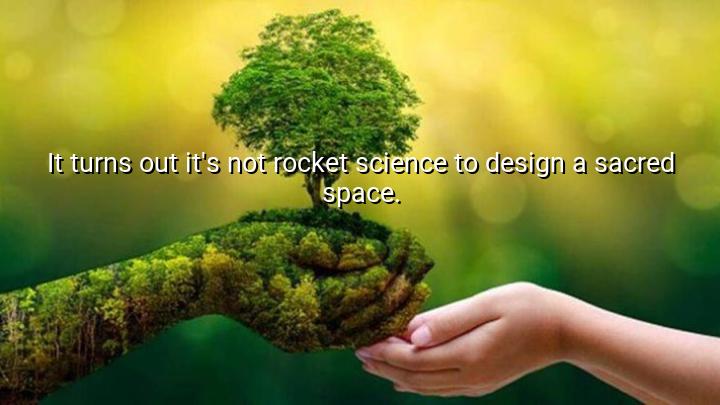




In this quote, Greg Lynn, an architect known for his innovative designs, suggests that creating a sacred space—a place intended for reflection, worship, or spiritual connection—is not as complex or difficult as it might seem. By saying "it’s not rocket science," Lynn implies that while designing such a space may appear challenging due to its significance, it doesn't require an extraordinary level of expertise or overly complicated solutions. Instead, it involves understanding the deeper human need for symbolism, emotion, and a sense of connection.
Lynn’s statement also reflects his belief in the simplicity and universality of good design. Sacred spaces, he suggests, do not necessarily require advanced technological expertise or complex architectural theories. Rather, their design should be grounded in the human experience, drawing on fundamental principles of space, light, and atmosphere to create environments that resonate with people’s spiritual needs.
The quote emphasizes the idea that designing a sacred space is less about technical difficulty and more about intention and understanding. It’s about creating an environment that fosters a sense of peace, reverence, and connection, which can be achieved through thoughtful design. Lynn’s approach highlights the importance of human-centered design, where the emotional and spiritual impact of a space is prioritized over complexity.
Originating from Greg Lynn, a prominent figure in contemporary architecture, the quote reflects his belief in the accessibility of thoughtful, meaningful design. Known for his work in digital and parametric design, Lynn suggests that sacred spaces, though deeply meaningful, don’t need to be overly complicated. This perspective challenges the idea that such spaces must always adhere to traditional, highly specialized architectural forms, advocating instead for design that is more intuitive and inclusive.

AAdministratorAdministrator
Welcome, honored guests. Please leave a comment, we will respond soon