

It may be hard for an egg to turn into a bird: it would be a jolly sight harder for it to learn to fly while remaining an egg. We are like eggs at present. And you cannot go on indefinitely being just an ordinary, decent egg. We must be hatched or go bad.
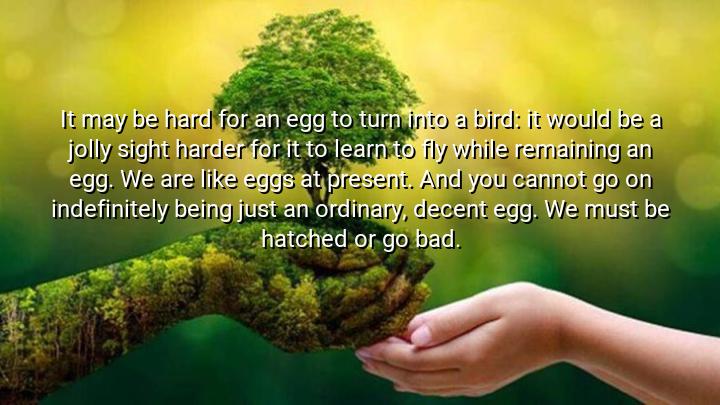




The quote by C. S. Lewis, "It may be hard for an egg to turn into a bird: it would be a jolly sight harder for it to learn to fly while remaining an egg. We are like eggs at present. And you cannot go on indefinitely being just an ordinary, decent egg. We must be hatched or go bad," uses a powerful metaphor to describe personal growth and transformation. Lewis compares human beings to eggs, emphasizing that growth requires leaving behind our current limitations and comfort zones. Just as an egg must hatch to become a bird and eventually learn to fly, people must undergo change and take risks to fully develop their potential.
C. S. Lewis, a renowned British writer and theologian, often explored themes of spirituality, morality, and self-discovery in his work. This quote reflects his belief that remaining in a state of safety or complacency—like staying inside the egg—prevents true growth and fulfillment. The metaphor underscores the necessity of change, challenging us to embrace transformation even when it is difficult or uncertain.
The quote also highlights the urgency of growth by stating that staying an "ordinary, decent egg" indefinitely is not an option; to stagnate is to "go bad." This vivid language serves as a warning that without growth and progress, individuals risk becoming stagnant or unfulfilled. Lewis encourages embracing the discomfort of change as a vital part of life’s journey.
In essence, C. S. Lewis’s quote inspires us to recognize that transformation is essential for living fully. It encourages courage in the face of change and reminds us that growth often requires leaving behind old identities to become something greater. This timeless metaphor continues to motivate people to pursue personal and spiritual development.

AAdministratorAdministrator
Welcome, honored guests. Please leave a comment, we will respond soon