

It is not sufficient to see and to know the beauty of a work. We must feel and be affected by it.
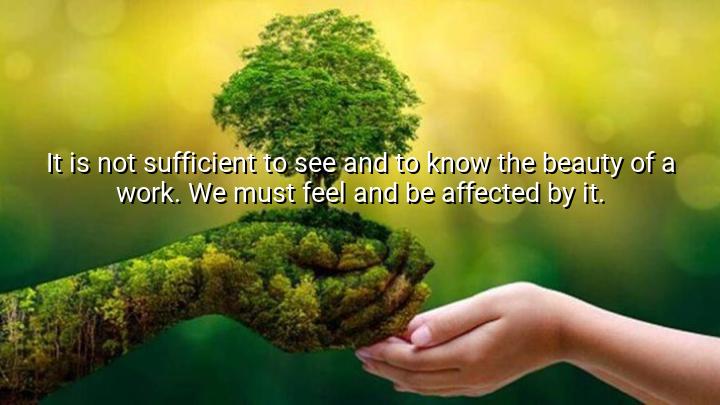




The quote by Voltaire, “It is not sufficient to see and to know the beauty of a work. We must feel and be affected by it,” highlights the distinction between intellectual appreciation and emotional engagement with art. Voltaire emphasizes that it’s not enough to simply recognize or analyze the beauty in a piece of work—whether it's literature, music, painting, or architecture. True appreciation comes when we are moved by it, when it resonates deeply within us and evokes a genuine emotional response.
As one of the most influential figures of the Enlightenment, Voltaire championed reason, freedom of thought, and human emotion. While he was a rationalist, he also understood the importance of feeling in human experience. This quote reflects his belief that aesthetic experiences should not be reduced to cold observation or technical critique. A work of art achieves its fullest power when it stirs the heart, not just the mind.
The idea that beauty must be felt aligns with Voltaire’s broader views on the human condition. He believed that reason and emotion should work together to enrich life. Beauty, therefore, is not merely an object to be studied but an experience to be lived. When we are truly affected by a work, it becomes part of us—it transforms, inspires, or even challenges us.
Ultimately, Voltaire's quote is a call to engage with art and beauty on a deeper level. It reminds us that true understanding goes beyond surface-level admiration or academic critique. Instead, it invites us to open ourselves to empathy, wonder, and sensation, allowing the essence of the work to leave a lasting imprint on our inner world.

AAdministratorAdministrator
Welcome, honored guests. Please leave a comment, we will respond soon