

He who is not just is severe, he who is not wise is sad.
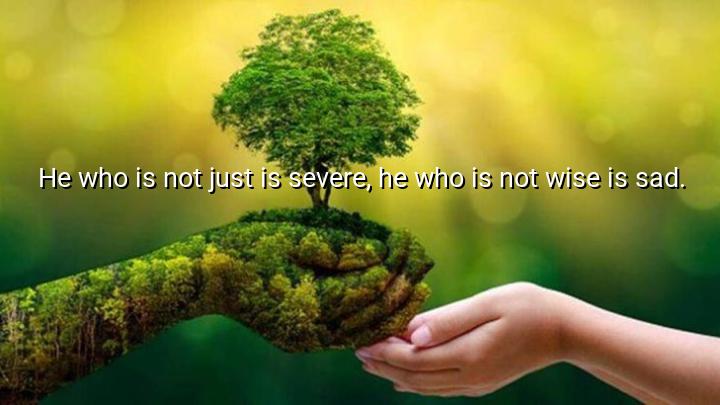




This quote by Voltaire addresses two essential virtues: justice and wisdom. He asserts that a person who lacks justice is likely to become severe, implying a harsh or rigid demeanor. A person who is unjust may be quick to judge, punish, or impose their views without compassion or understanding, often creating a cold or oppressive environment. In contrast, someone who lacks wisdom is described as sad, pointing to the emotional toll of ignorance or a lack of insight. Without wisdom, individuals may make poor decisions or be unable to navigate life's complexities, leading to sorrow or despair.
Voltaire, a prominent French philosopher during the Enlightenment, often criticized the lack of reason and fairness in society. His works, such as Candide, embody his belief in reason, humanism, and justice. This quote highlights his view that a balanced life requires not only moral uprightness but also the ability to understand and navigate the world with wisdom. Justice without wisdom can lead to tyranny, while wisdom without justice can result in passivity or emotional stagnation.
The origin of this quote can be traced to Voltaire’s broader critique of the societal and political systems of his time, where he saw the abuse of power and ignorance leading to suffering. In his works, he often pushed for a more enlightened approach to governance and personal conduct, urging the importance of rationality and fairness. The quote emphasizes that achieving harmony in life requires the union of both justice and wisdom to avoid the extremes of severity and sadness.
In essence, Voltaire's words serve as a reminder of the need for balance in our moral and intellectual lives. By cultivating both justice and wisdom, individuals can avoid the extremes that lead to personal or societal despair, fostering a more compassionate and thoughtful existence.

AAdministratorAdministrator
Welcome, honored guests. Please leave a comment, we will respond soon