

It is not because the truth is too difficult to see that we make mistakes... we make mistakes because the easiest and most comfortable course for us is to seek insight where it accords with our emotions - especially selfish ones.
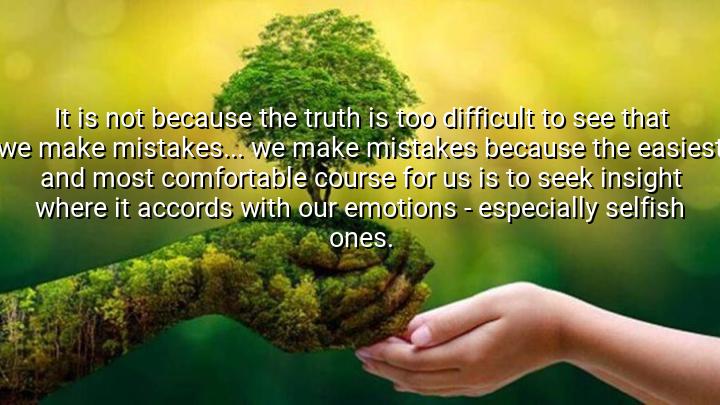




The quote by Aleksandr Solzhenitsyn delves into the nature of mistakes and how we often make them not due to an inability to recognize the truth, but because we choose the easier path that aligns with our emotions, particularly selfish ones. Solzhenitsyn suggests that it is not the difficulty of the truth itself that causes us to err, but rather our tendency to seek answers that confirm our own desires or biases. The comfort of aligning with our emotions often blinds us to the deeper, more difficult truths that require objective insight.
This quote speaks to the concept of cognitive bias, where individuals tend to favor information that supports their existing beliefs or emotional inclinations, often at the expense of rationality and truth. It points out that when we act based on self-interest, we are more likely to ignore inconvenient truths and make decisions that reinforce our own comfort, even if they are ultimately misguided. This leads to mistakes that could have been avoided by embracing uncomfortable truths.
The origin of this quote can be traced to Aleksandr Solzhenitsyn, a Russian writer and dissident, known for his works that critiqued the Soviet regime and explored the themes of truth, justice, and personal responsibility. Solzhenitsyn himself faced tremendous challenges, including imprisonment and exile, which made him deeply reflective about the human tendency to avoid the harsh realities of life in favor of more convenient or emotionally satisfying explanations. His own life experiences informed his views on the importance of truth and the dangers of evading it.
In essence, Solzhenitsyn’s quote serves as a powerful reminder of the role that emotions and selfishness play in shaping our decisions and actions. It calls us to recognize that mistakes are often made not because the truth is elusive, but because we choose to seek comfort over clarity. Understanding this can help us make better, more rational decisions and confront difficult truths with integrity.

AAdministratorAdministrator
Welcome, honored guests. Please leave a comment, we will respond soon